 English
 عربى
عربى Español


Content
A cereal carton that sits on a shelf for eight months, a paper tray under a hot ready meal, and the sleeve wrapped around a yogurt multipack all begin as the same family of material: paperboard. Yet the board that performs well behind a frozen pizza box will fail against butter or cooking sauces, and a grade that folds cleanly on a dry morning can crack when warehouse humidity rises. The short conclusion first: paperboard is the default rigid-fiber choice for dry, chilled, and frozen food because it is stiff, light, printable, and widely recyclable, but only the correct grade, paired with the right barrier and a supplier who holds tight tolerances, delivers that result in practice.
What Counts as Paperboard in Food Packaging
The dividing line is weight and thickness rather than chemistry. Most classification systems treat fiber material above roughly 224 gsm, or about 0.3 mm in caliper, as board; anything lighter is paper. That single threshold explains why board dominates structural food packaging. Only at these weights can a sheet be creased, glued, and erected into a carton that survives filling, palletizing, and months of retail handling without collapsing.
Walk through a supermarket and the formats are easy to spot. Folding cartons carry breakfast cereal, tea, confectionery, and baking mixes. Cup stock forms hot and cold drink cups. Liquid packaging board, laminated with a thin polyethylene layer, holds milk and juice for months without refrigeration. Rigid trays and plates carry fresh and ready-to-eat meals, while sleeves, carton blanks, and label stock round out the range. For purchasing, two contact levels matter. Direct contact means the board touches the food itself, as with a tray under a pastry. Indirect contact means an inner liner, film, or barrier sits between them, as in most cereal cartons. The compliance requirements differ sharply between the two, and confusing them is one of the most expensive mistakes a packaging buyer can make.
The Board Grades That Matter on a Food Line
Not all food packaging board is interchangeable, and most of the difference comes from ply structure. Folding boxboard, known as FBB and supplied in coated GC1 and GC2 variants, is built in multiple layers: a bleached, coated surface for print quality, and a middle layer of mechanical pulp that delivers bulk and stiffness at a lower grammage. That stiffness-to-weight ratio is why FBB dominates confectionery cartons, cake boxes, and frozen-food sleeves. Solid bleached sulfate (SBS) board, made from a single ply of virgin bleached kraft, is denser and stronger, which suits premium frozen foods and the base layers of liquid packaging. Uncoated kraft handles takeaway bags and wrapping, while white-lined chipboard, built on recycled fiber, is economical for outer cartons but generally needs a certified barrier before it can approach food directly.
| Grade | Construction | Typical food applications | Key properties to verify |
|---|---|---|---|
| FBB (GC1/GC2) | Multi-ply, coated bleached surface over a mechanical-pulp middle | Confectionery cartons, cake boxes, frozen-food sleeves | Bulk, stiffness-to-weight, crease and fold quality |
| SBS | Single-ply virgin bleached kraft | Premium frozen food, liquid packaging board base | Burst strength, whiteness, low odor |
| Uncoated kraft | Machine-finished virgin or recycled fiber | Takeaway bags, wrapping, dry-goods sacks | Wet strength, food-contact declaration |
| White-lined chipboard | Recycled body with a bleached top lining | Outer cartons and non-contact sleeves | Barrier integrity, mineral-oil migration control |
When one grade has to cover several of these jobs at once, such as carton bodies, printed sleeves, and tray lids, a high-bulk multi-ply ivory board is usually the practical answer:
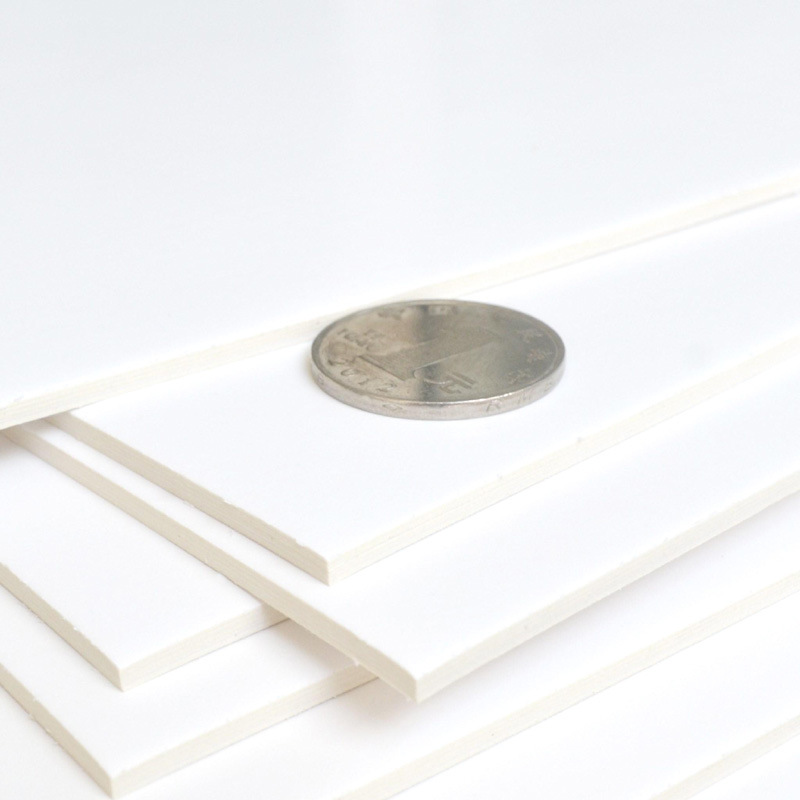
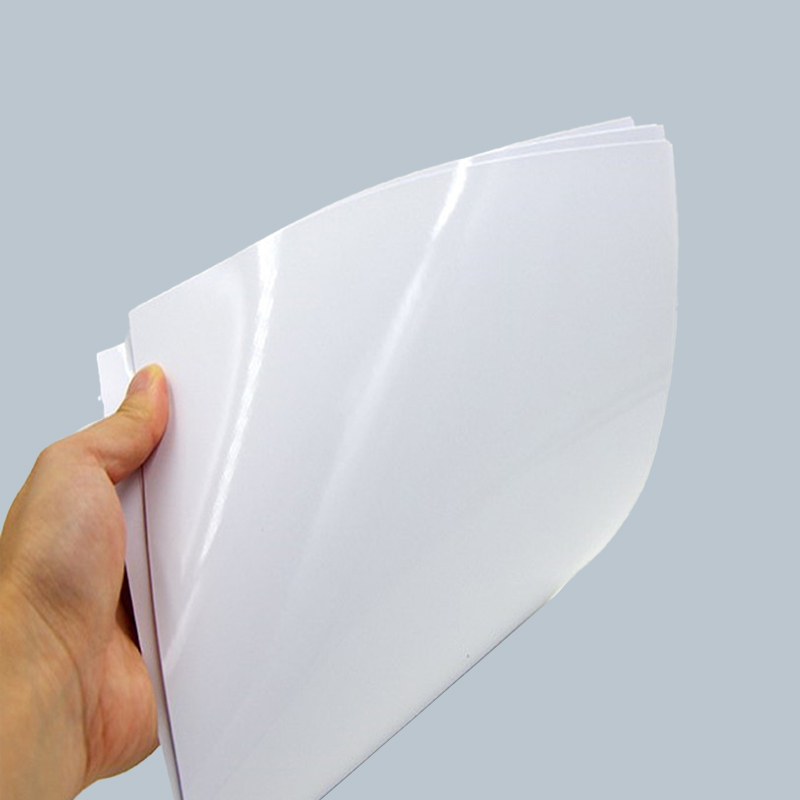
high-bulk GC1/GC2/FBB/C1S ivory board sheets High Bulk GC1 GC2 FBB C1S Ivory Board Paper in SheetsA multi-ply coated ivory board available from 190 to 400 gsm, suited to carton bodies, sleeves, and tray lids. Its internal bulk gives stiffness at moderate grammages, helping control material and freight costs.View Product →
Grades in this family combine a coated printing surface with enough internal bulk to hold shape at moderate grammages, which keeps both the material bill and the freight bill predictable across a production year.
Barriers Decide Whether the Board Can Touch the Food
Bare paperboard is porous, and that is both its strength and its weakness. Porosity lets the material breathe and stay recyclable, but it also means hot fats wick straight into the fiber and moisture softens a carton wall within hours. Barrier technology is therefore where most food-packaging projects succeed or fail.
The main options are mechanical and chemical. Careful fiber refining and hard sizing give a base level of water and grease resistance. Grease-resistant treatments, now almost always fluorine-free as PFAS-based chemistries are phased out of food contact in major markets, raise oil holdout for pastry and fried-food applications. Extruded polyethylene or PLA linings create full moisture barriers for cups and liquid cartons, and aqueous dispersion coatings offer a middle path that keeps the finished board repulpable.
Beyond barriers, direct food contact is fundamentally a compliance question. In the United States, paper and paperboard components are regulated as indirect food additives under Title 21 of the Code of Federal Regulations, Part 176. In the European Union, Framework Regulation (EC) No 1935/2004 sets the safety principle, and Regulation (EC) No 2023/2006 requires good manufacturing practice throughout production. Recycled fiber adds a further constraint, because mineral oil residues and optical brighteners limit how close it may come to food. Food-grade board is therefore specified, produced, and tested differently from graphic board, and buyers should treat a documented food-contact declaration as non-negotiable. The manufacturing side, from fiber selection to wet-end control and the way a food-grade surface layer is built, is covered step by step in our guide to the food-grade ivory board production process.
Converting Performance Buyers Often Overlook
Food brands rarely see the carton line, but the board's converting behavior decides whether that line runs at specification or stops every few minutes. Stiffness at a given grammage determines how fast a carton can be erected and filled. Caliper tolerance, ideally held within a few microns across an entire jumbo roll, keeps gluing slots and folding plates calibrated. Grain direction controls whether a fold cracks along the crease, and moisture content decides whether finished cartons curl after shrink-wrapping. Print performance belongs on the same list: a coated surface that holds fine halftones is what keeps shelf graphics legible through a damp cold-chain environment.
Creasing and die-cutting are where multi-ply grades prove their structure, and where weak boards reveal themselves as hairline cracks along every fold. Before locking a structural design, it is worth reviewing how FBB behaves in folding, creasing, and die-cutting, because crack resistance at the crease is a property of the board rather than of the tooling.
For premium confectionery and gift-style food packaging, where the carton itself is part of the product experience, grammage rises and surface quality matters even more:
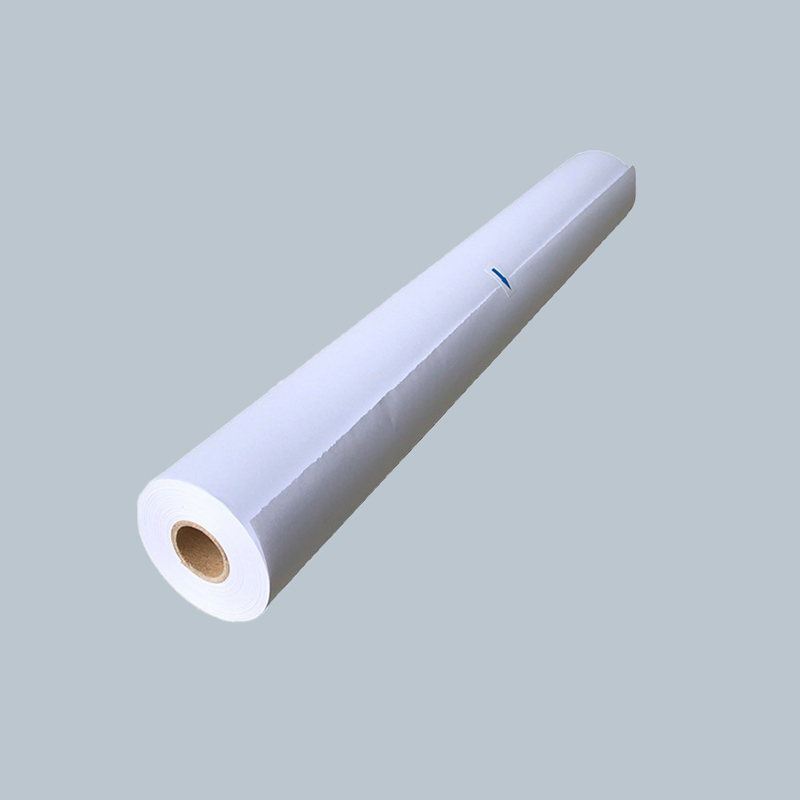
1050mm 350gsm ivory board jumbo rolls for gift boxes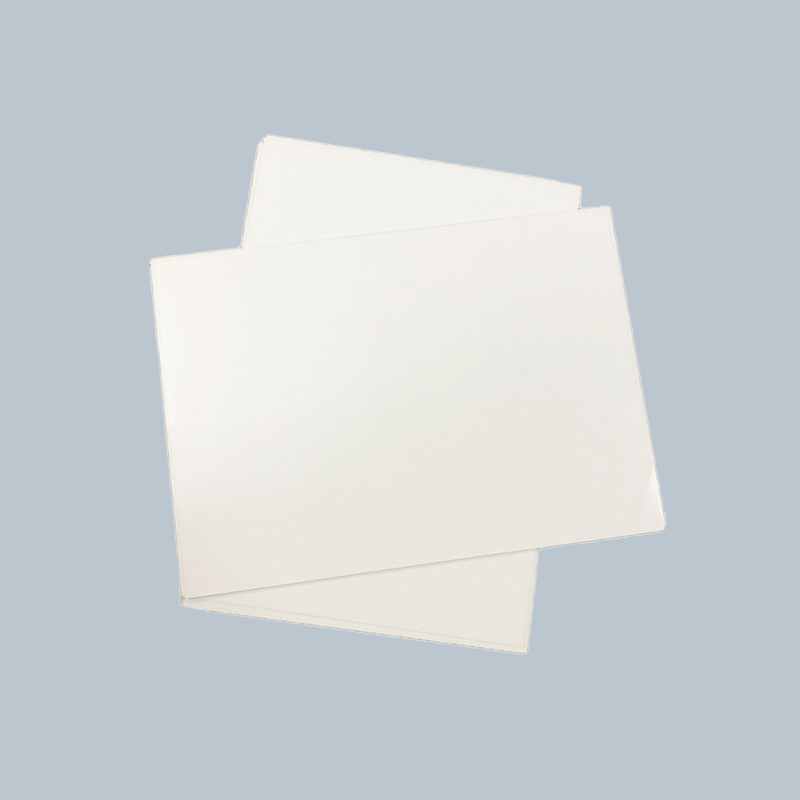 1050mm 350gsm Ivory Board Paper Jumbo Roll for Gift BoxesA heavyweight 350gsm coated ivory board supplied in 1050mm jumbo rolls, aimed at premium confectionery and gift packaging. Rolls let converters sheet to their own sizes and avoid handling marks before printing.View Product →
Supplying heavy grades as jumbo rolls lets converters sheet to their own sizes and prevents the handling marks that sheets can pick up between mill and press.
What to Verify Before Committing to a Supplier
Board quality is not a sheet property alone; it is a process property. Two mills can offer the same grade on paper and deliver very different consistency across a year of orders. Before signing, put these five points in writing:
- Food-contact documentation, including a declaration of compliance and third-party migration test reports covering every market you sell into.
- In-line quality control, specifically whether caliper, moisture, and brightness are measured continuously by a QCS-class system or only sampled at the reel.
- Certification, meaning ISO quality management, FSC chain of custody, and independent laboratory testing such as SGS.
- Capacity and stock depth, meaning whether the mill can absorb your peak season and whether it holds your grade in permanent stock.
- Customization range, including grammage, width, roll or sheet format, and coating options matched to your converting setup.
For transparency, this is the standard we hold ourselves to at Suzhou For-Long. We have manufactured paper products for 14 years, run more than 20 production lines with over 60,000 tons of annual capacity, and operate a 5,280 mm Voith paper machine at speeds up to 1,400 m/min under fully computerized control. More than 10 million RMB invested in QDS and QCS systems keeps stability, smoothness, whiteness, and flatness measured on every reel rather than assumed. Our grades carry ISO 9000, ISO 14000, and ISO 18000 certification along with SGS and FSC credentials, and roughly 5,000 items sit in permanent stock, which means standard packaging and printing grades ship without waiting for a production slot.
The buying decision for paperboard food packaging reduces to three matches. Match the grade to the food's fat and moisture load. Match the barrier to the shelf life promised on the label. Match the supplier's process control to the tolerances your converting line needs. When those three align, the same fiber family that forms a cereal liner will also carry a premium chocolate box, with the food safe, the print sharp, and the carton line running without unscheduled stops.