 English
 عربى
عربى Español


Content
- 1 What Bible Paper Is Made Of
- 2 Bible Paper Thickness: The Numbers Behind the Thinness
- 3 Why Bible Paper Is So Thin: The Practical Logic
- 4 Offenbach Bible Paper: A Historic Center of Production
- 5 The Manufacturing Process: How Bible Paper Is Made
- 6 Key Properties of Quality Bible Paper
- 7 India Paper vs. Bible Paper: Is There a Difference?
- 8 Caring for Bibles and Books Printed on Thin Paper
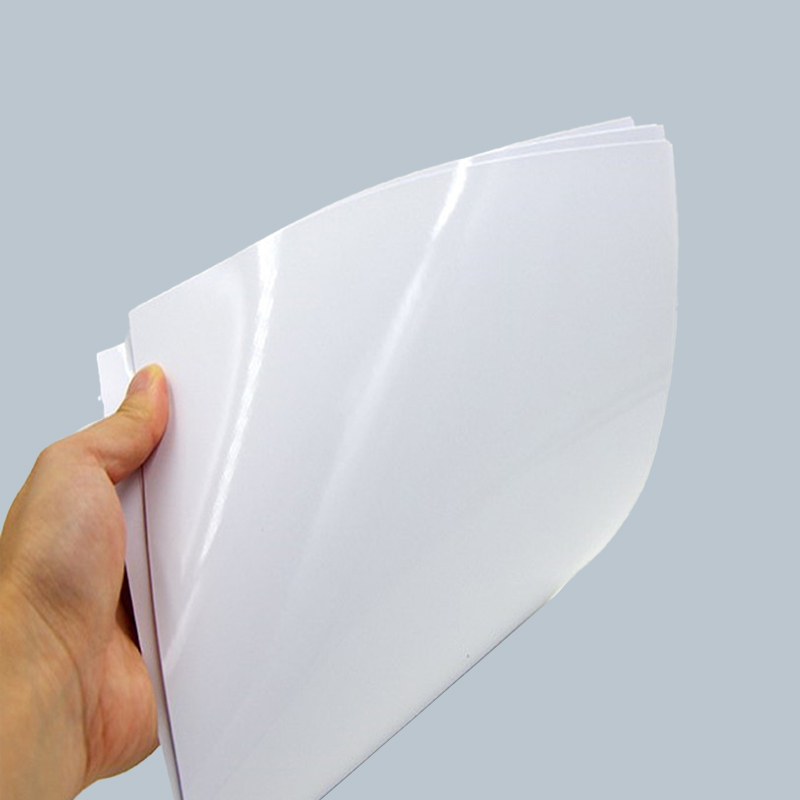
Bible paper is made primarily from cotton and flax (linen) fibers rather than wood pulp, which is what gives it its distinctive thinness, strength, and long-term durability. A typical bible page weighs between 28 and 40 grams per square meter (gsm) — roughly one-third the weight of standard office paper at 80 gsm — yet it resists tearing, handles thousands of page turns without degrading, and can last centuries without the yellowing that afflicts wood-pulp papers. The thinness is not a compromise: it is a deliberate engineering achievement that allows a complete 1,200–1,500 page Bible to be bound into a single portable volume without becoming unwieldy. Among the most respected producers of this material is Papierfabrik Schleicher & Schuell in Dassel, Germany, along with G. F. Smith and the historic mills of Offenbach — names synonymous with benchmark-quality bible paper for over a century.
What Bible Paper Is Made Of
The composition of bible paper sets it apart from virtually every other category of printing paper. While the vast majority of commercial printing papers are manufactured from wood pulp — a process that produces affordable paper but one prone to acid-driven yellowing and long-term brittleness — bible paper is produced from a fundamentally different raw material base.
Cotton and Linen Fiber Content
Authentic bible paper is composed of cotton fiber, linen (flax) fiber, or a blend of both, typically in combination with a small percentage of chemical cellulose for consistency in formation. The raw material is often sourced from textile waste — cotton rag cuttings from garment manufacturing and flax residue from linen production — which has historically made it an efficient use of byproduct material.
Cotton and linen fibers are naturally longer and stronger than the cellulose fibers extracted from wood. Cotton fibers average 25–35 mm in length compared to 1–3 mm for typical softwood kraft pulp fibers. This length difference is the primary reason cotton-rag papers can be made thinner without sacrificing tear resistance: longer fibers form a denser, more interlocked web during paper formation, providing structural integrity at weights that would cause wood-pulp paper to disintegrate.
Acid-Free Chemistry and Permanence
Wood-pulp paper contains lignin and residual acidic compounds from the papermaking process that initiate a slow hydrolysis reaction, gradually degrading the cellulose chains and causing paper to yellow and become brittle. Cotton and linen fibers are naturally low in lignin and, when processed correctly, are effectively acid-free. This is why medieval manuscripts written on rag paper remain flexible and legible after 600 years, while newspapers printed in the mid-20th century have already turned to brittle yellow fragments.
Most premium bible papers are manufactured to a pH of 7.5–9.0 (slightly alkaline), with an alkaline reserve built into the paper to neutralize any future acid exposure from the environment. This chemistry is one reason quality Bibles are treated as heirloom objects — the paper is genuinely engineered to outlast multiple generations.
Opacity-Enhancing Fillers
A critical challenge in making any ultra-thin paper is opacity. Very thin sheets are naturally translucent, and print on one side shows through to the other — a problem called "show-through" or "strike-through" that makes the text on the reverse side visible and reduces readability. To counteract this, bible paper manufacturers incorporate titanium dioxide (TiO₂) or calcium carbonate as opacity-building fillers into the fiber furnish during papermaking. These white mineral pigments scatter light, preventing it from passing through the sheet even at very low basis weights. The balance between low basis weight and high opacity is one of the defining technical achievements of bible paper production.
Bible Paper Thickness: The Numbers Behind the Thinness
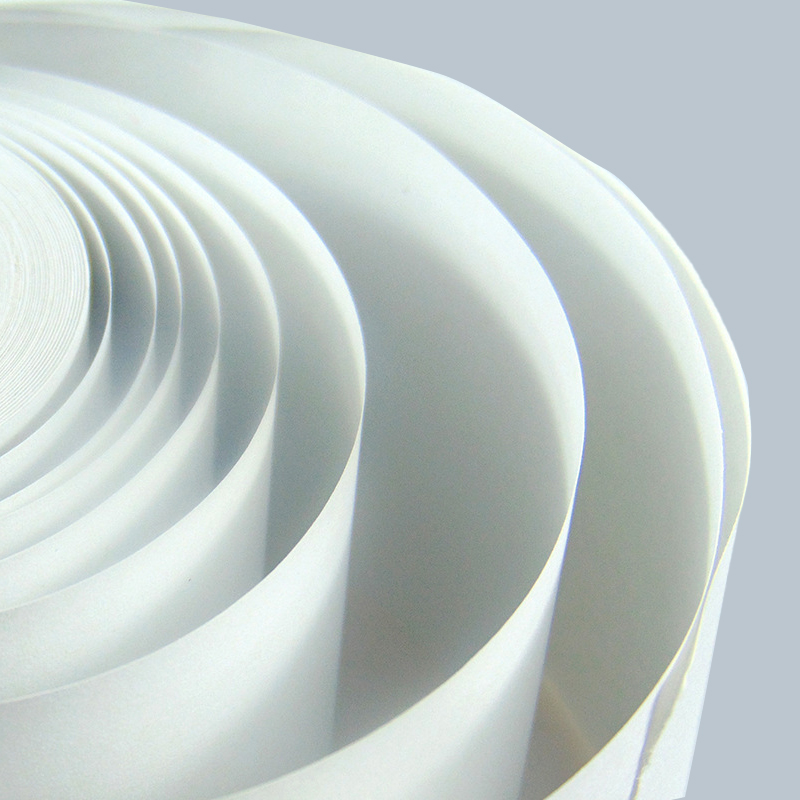
Bible paper thickness is measured in two ways: basis weight (gsm) and caliper (physical thickness in micrometers or millimeters). Understanding both measurements — and how they relate to each other — clarifies why bible paper can be simultaneously thin and strong.
| Paper Type | Basis Weight (gsm) | Caliper (µm) | Typical Use |
|---|---|---|---|
| Bible / India paper | 28–40 gsm | 40–65 µm | Bibles, dictionaries, legal volumes |
| Airmail / onion skin | 25–45 gsm | 35–55 µm | Correspondence, carbon copy forms |
| Newsprint | 45–52 gsm | 60–80 µm | Newspapers |
| Paperback book paper | 55–70 gsm | 80–100 µm | Trade paperbacks, novels |
| Standard office paper | 80 gsm | 100–110 µm | Printing, copying |
| Premium coated art paper | 115–150 gsm | 100–130 µm | Coffee table books, brochures |
The thinnest grades of bible paper — around 28–30 gsm — are used in ultra-compact pocket Bibles and reference editions where minimum volume is the design objective. Standard pew Bibles and study editions typically use 35–40 gsm paper, which provides a better balance of thinness, opacity, and ease of handling. The caliper (physical thickness) of 40–65 micrometers means a 1,500-page Bible printed on 35 gsm paper can achieve a total spine width of under 40 mm — a feat completely impossible with standard book paper.
Bulk vs. Basis Weight in Bible Paper
One technical nuance important to Bible publishers and bookbinders is the concept of "bulk" — the ratio of physical thickness to basis weight. A high-bulk paper is physically thicker for its weight than a low-bulk paper. Bible paper is deliberately manufactured as low-bulk: it is both light and physically thin. Some reference book papers, by contrast, are made high-bulk to give thin books a more substantial feel in the hand without adding weight. These are opposite engineering objectives, and confusing them leads to specification errors when publishers select paper for new editions.
Why Bible Paper Is So Thin: The Practical Logic
The thinness of bible paper is not arbitrary, aesthetic, or the result of cost-cutting. It is the direct answer to a specific engineering problem: how do you bind a complete text of approximately 800,000 words across 1,189 chapters into a single volume that a person can carry and use daily?
The Page Count Problem
A standard Bible printed in a readable 10–11 point font runs between 1,200 and 1,600 pages. If printed on 80 gsm office paper, a 1,400-page Bible would produce a spine approximately 75–80 mm wide — a volume too thick to hold comfortably in one hand and too heavy for sustained reading. Printed on 35 gsm bible paper, the same edition achieves a spine of roughly 35–40 mm, small enough to fit in a jacket pocket and light enough for daily carry. This compression ratio — roughly 2:1 compared to standard book paper — is the entire point of the material.
Applications Beyond Scripture
The same material logic applies wherever a large volume of text must be compressed into a portable, durable format. Bible paper — or "India paper" as it is also known in the book trade — is used for:
- Unabridged dictionaries — The Oxford English Dictionary, Webster's unabridged editions, and multilingual legal dictionaries all rely on bible-weight paper to keep multi-thousand-page volumes manageable.
- Complete works editions — Single-volume complete works of Shakespeare, Proust, or Tolstoy compress what would otherwise be multi-volume sets into a single bound book.
- Legal codebooks and statutes — Complete annotated legal codes that practitioners need to carry to court or reference on location.
- Medical references — Drug reference guides like the Physicians' Desk Reference (PDR) in print form used bible paper to achieve single-volume portability.
- Prayer books and liturgical texts — Breviary, siddur, and similar religious texts used daily by clergy and laypeople across multiple traditions.
Why Thinner Paper Requires Better Paper
The apparent paradox of bible paper is that making it thinner actually requires higher-quality raw materials and more precise manufacturing than making heavier paper. At 35 gsm, there is almost no margin for fiber inconsistency, formation defects, or caliper variation — any flaw that would be inconsequential at 80 gsm becomes a visible thin spot, pinhole, or weak area at 35 gsm. This is why bible paper costs significantly more per tonne than standard book paper, and why it is produced by only a small number of specialist mills worldwide capable of maintaining the required tolerances.
Offenbach Bible Paper: A Historic Center of Production
The name "Offenbach bible paper" refers to a tradition of high-quality thin paper production associated with the Frankfurt/Offenbach region of Germany, which developed into one of Europe's most important centers for premium paper manufacturing from the 18th century onward. Offenbach am Main, located directly east of Frankfurt, became home to several specialist paper mills and printing establishments whose output set quality standards for bible and India paper that continue to influence the industry today.
The German Tradition of Bible Paper Manufacturing
Germany's central role in bible paper production is inseparable from its role in the history of printing itself. Following Gutenberg's development of movable type in Mainz in the 1450s — just 30 km from Offenbach — the Rhine-Main region became the epicenter of European book production. The demand for large-scale Bible printing drove continuous development of the paper stock required to support it. By the 19th century, German mills had developed highly refined processes for producing rag-based thin papers with the opacity, strength, and surface characteristics needed for high-volume Bible publishing.
The specific association of Offenbach with bible paper quality is connected to the publishing houses and paper distributors that operated from the city, which served as a commercial and trading hub for the broader Frankfurt book trade — historically one of the largest in the world through the Frankfurt Book Fair, established in the 16th century. Offenbach-region paper products were distributed internationally, and "Offenbach" became a quality designation in the way that "Champagne" functions for sparkling wine — a geographic name that carried qualitative implication.
Notable European Bible Paper Mills
Several European mills have been historically associated with benchmark bible and India paper production:
- Papierfabrik Scheufelen (Germany) — A longstanding producer of premium publication papers including thin specialty grades, operating in the Lenningen valley of Baden-Württemberg.
- Gmund (Germany) — Bavaria-based mill known for specialty and luxury papers, including ultra-thin grades for high-end publishing and bible applications.
- Caledonian Paper / Arjowiggins (UK/France) — Major producers of bible and India paper for the global publishing trade, with Arjowiggins historically supplying bible paper to Oxford University Press and Cambridge University Press for their reference and scripture editions.
- Oxford Paper (now Sappi) — The Oxford University Press developed its own paper specifications in collaboration with UK mills, and "Oxford India paper" became a specific product designation for their fine-print reference editions.
Today, global production of bible and India paper is concentrated among a handful of specialized mills. The majority of the world's bible paper supply comes from mills in Germany, France, Finland, and India, with some production in Japan for high-end literary editions. The consolidation of the specialty paper industry through acquisitions and mill closures in the 2000s–2010s has reduced the number of active producers, making high-quality bible paper an increasingly specialized commodity.
The Manufacturing Process: How Bible Paper Is Made
The production of bible paper follows the same fundamental papermaking steps as any other paper, but with significantly tighter tolerances and additional complexity at each stage.
Fiber Preparation
Cotton and linen rags are sorted, cleaned, and cut before being cooked in alkaline solution to break down non-cellulosic components (waxes, proteins, dyes from the original textiles) and produce a clean, white fiber pulp. The resulting cellulose is then refined — mechanically worked to develop fiber bonding surface area — to a degree precisely calibrated for the target paper grade. Over-refining produces a dense, low-porosity sheet; under-refining produces weak formation. The refining endpoint for bible paper is determined to produce maximum formation consistency at minimum basis weight.
Sheet Formation and Drying
The dilute fiber-and-filler suspension (typically less than 1% fiber by weight in water) is deposited onto a moving wire mesh, where water drains away and the fibers settle into an interlocked web. For bible paper, this forming process must produce exceptionally uniform fiber distribution — any variation in formation shows as visible light/dark areas when the sheet is held to light, a defect called "wild formation" that is unacceptable at thin weights. The wet sheet is then pressed and passed through a series of heated drying cylinders, with tension carefully controlled to prevent sheet distortion.
Surface Treatment and Finishing
Most bible papers receive a light surface sizing — typically a starch or synthetic polymer solution applied at the size press — to improve surface strength and ink receptivity. This is followed by calendering: passing the paper through polished steel rolls under pressure to achieve the smooth, consistent surface finish required for precise typographic reproduction. Bible paper is typically finished to a relatively smooth but uncoated surface, providing good ink holdout without the high gloss of coated papers that would look visually incongruous in a sacred or reference text context.
Key Properties of Quality Bible Paper
Publishers and bookbinders evaluating bible paper specify a defined set of properties that must be met simultaneously — a combination that makes bible paper technically demanding to produce and impossible to replicate simply by cutting standard paper thinner.
| Property | Typical Range | Why It Matters |
|---|---|---|
| Basis weight | 28–40 gsm | Determines total book thickness and weight |
| Opacity | 85–92% | Prevents show-through from reverse side print |
| Brightness (ISO) | 82–90% | Text contrast and reading comfort |
| Tear resistance | High (relative to weight) | Survives thousands of page turns |
| pH | 7.5–9.0 (alkaline) | Long-term permanence, no acid degradation |
| Caliper uniformity | ±2–3 µm variation | Consistent page feel and binding geometry |
| Moisture content | 4–6% | Dimensional stability in varying humidity |
The opacity specification is particularly revealing. Achieving 85–92% opacity at 28–40 gsm requires a precise combination of titanium dioxide loading, fiber formation quality, and sheet density — any one of which, optimized in isolation, would compromise the others. This multi-variable optimization is what distinguishes specialist bible paper mills from general paper manufacturers.
India Paper vs. Bible Paper: Is There a Difference?
The terms "bible paper" and "India paper" are often used interchangeably in the book trade, but there are subtle historical and technical distinctions worth understanding.
"India paper" is the older trade term, originating from the 18th century and likely named for the thin papers imported from Asia that early European publishers admired for their printing qualities. Oxford University Press popularized the term "Oxford India paper" for its specific grade of thin printing paper beginning in the 1870s, and the Oxford India Bible of 1875 — printed on paper that was then extraordinarily thin at approximately 40 gsm — became the benchmark product that defined the category for publishers worldwide.
"Bible paper" as a term came into wider use in the 20th century as the material's primary application became increasingly identified with religious publishing. In practice today:
- Bible paper typically refers to paper in the 28–40 gsm range, optimized for double-sided text printing with maximum opacity at minimum weight.
- India paper in book trade usage sometimes refers to a slightly heavier grade (40–52 gsm) or specifically to the Oxford-specification grade used in their reference editions — though usage varies by publisher and country.
- Both terms describe cotton-linen rag papers of similar composition; the distinction is primarily one of trade convention rather than fundamental material difference.
Caring for Bibles and Books Printed on Thin Paper
Despite its engineering for longevity, bible paper benefits from thoughtful handling that takes its thinness into account. The following practices preserve both the paper and the binding:
- Turn pages from the upper corner using a dry, clean finger rather than licking the finger — saliva introduces moisture and acids that degrade the paper surface at the contact point over time.
- Avoid folding page corners as bookmarks — the sharp fold crease weakens the fiber network at that point and, over repeated handling cycles, can cause the page to tear along the crease line.
- Store away from humidity extremes — while cotton-rag paper is more dimensionally stable than wood-pulp paper, prolonged exposure to high humidity (above 65% relative humidity) promotes mold growth and causes pages to cockle and wave.
- Use only pencil for annotations — ballpoint pen ink and many felt-tip inks contain solvents that penetrate the thin sheet and show through to the reverse side. Pencil annotations are also reversible. If pen must be used, a fine-point archival pigment ink pen minimizes bleed-through better than dye-based inks.
- Avoid direct sunlight storage — even though the paper itself is alkaline and stable, many printing inks used in bible production are not UV-stable, and prolonged UV exposure will fade text over years.