 English
 عربى
عربى Español


Content
How Paper Is Made from Wood
Wood is roughly 40–50% cellulose, the long-chain polymer that gives paper its structure, interspersed with lignin — the natural glue that binds wood fibers together — and hemicellulose. Papermaking is fundamentally the process of separating cellulose fibers from everything else in wood, then reassembling them into a flat, bonded sheet. The result retains almost none of the original wood's appearance or mechanical character.
From Log to Pulp
The process begins with debarking and chipping harvested logs into uniform wood chips roughly 25mm long. These chips feed into one of two primary pulping processes:
- Chemical pulping (Kraft process): Chips are cooked under high pressure in an aqueous solution of sodium hydroxide and sodium sulfide — known as white liquor — at temperatures around 170°C. This dissolves lignin and hemicellulose while leaving cellulose fibers largely intact. The Kraft process produces the strongest pulp and accounts for approximately 80% of global wood pulp production. The spent cooking liquor (black liquor) is recovered and burned as a fuel source, making the process largely self-sustaining in energy terms.
- Mechanical pulping: Wood chips are physically ground or refined to separate fibers without chemical dissolution of lignin. Mechanical pulps yield more fiber per ton of wood but retain lignin, which causes the paper to yellow and weaken over time. Newsprint and lightweight publication papers typically use mechanical or thermomechanical pulp (TMP).
After pulping, the resulting fiber slurry — called stock — is washed, screened to remove contaminants, and may be bleached to achieve the brightness required for the end product.
Sheet Formation on the Paper Machine
The diluted fiber stock — typically less than 1% fiber suspended in water — is pumped onto the wire section of a Fourdrinier paper machine, a continuously moving fine mesh screen. Water drains rapidly through the wire by gravity and vacuum suction, and the fibers begin to bond through hydrogen bonding between cellulose chains. This self-bonding property of cellulose is what makes papermaking possible without binders or adhesives.
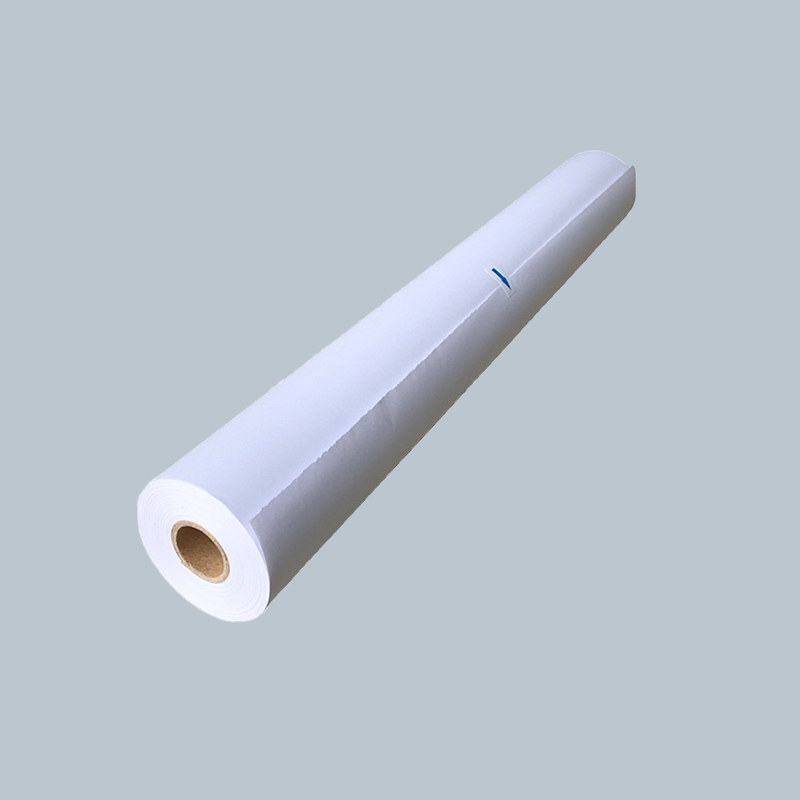
The wet web of paper then passes through press rolls that squeeze out more water, followed by a series of steam-heated drying cylinders that reduce moisture content to approximately 4–6%. A standard commercial paper machine may operate at speeds exceeding 2,000 meters per minute and produce a continuous sheet many meters wide — a scale that makes modern papermaking one of the most capital-intensive manufacturing processes in existence.
Finishing: Sizing, Coating, and Calendering
Raw paper off the dryer section is porous and relatively rough. Several finishing steps adapt it for specific applications:
- Sizing: Starch or synthetic sizing agents are applied to the surface or added internally to control ink absorption and improve surface strength. Without sizing, ink would bleed and feather uncontrollably into the sheet.
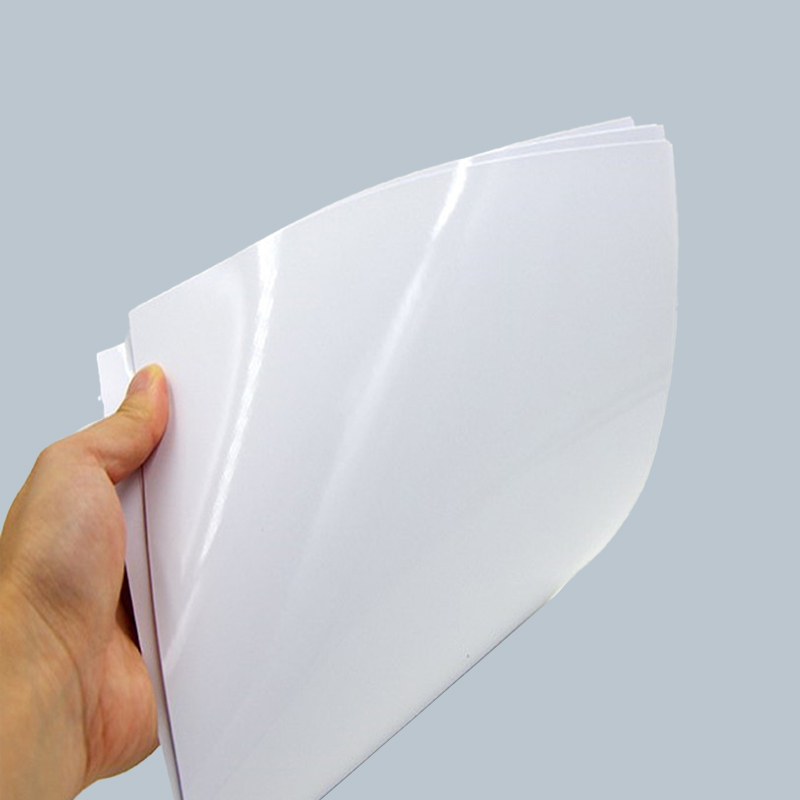
- Coating: Coated papers receive one or more layers of pigment (typically calcium carbonate or kaolin clay) mixed with binders. Coating fills the surface irregularities of the fiber network, creating the smooth, high-brightness surface used in magazines, commercial print, and premium labels.
- Calendering: Passing the paper through polished steel rolls under pressure compresses and smooths the surface. Supercalendered paper achieves a near-gloss finish without coating, used in lightweight publication grades.
Why Is Paper White
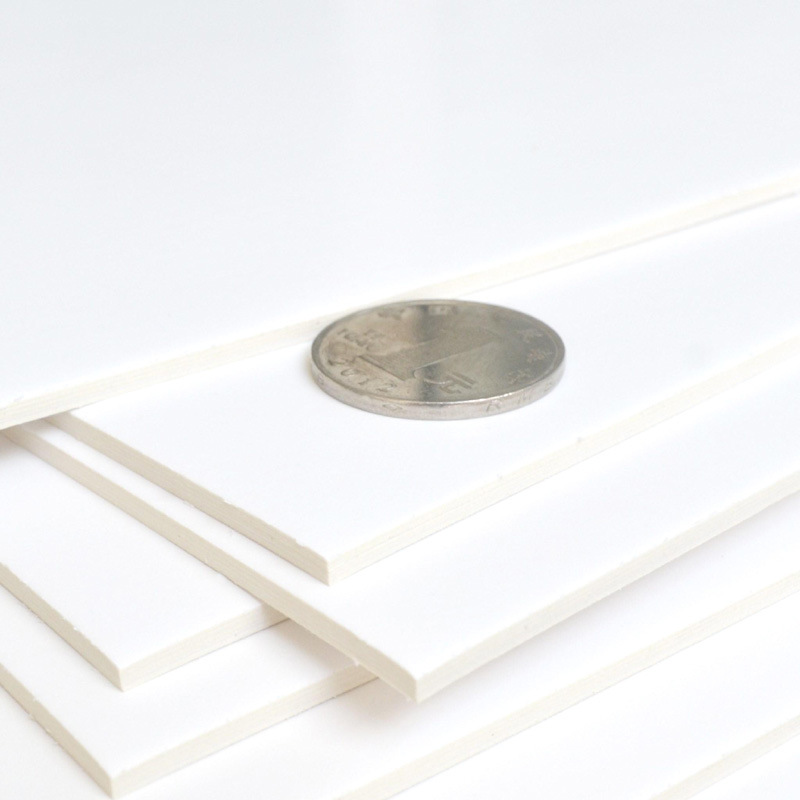
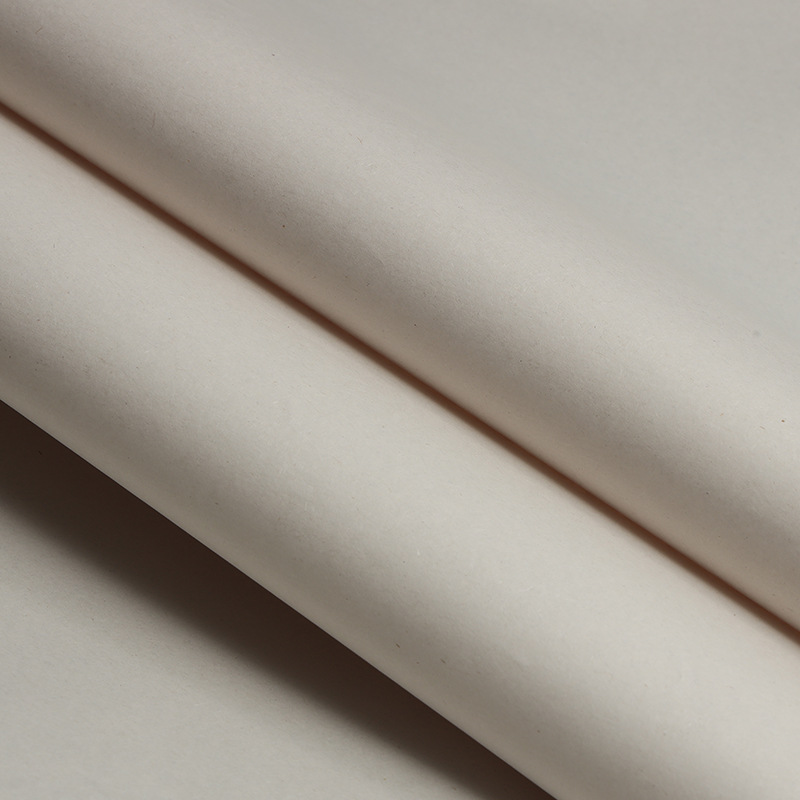
Freshly pulped cellulose fibers are not white — they range from cream to tan or brown depending on the pulping method and wood species used. The whiteness of commercial paper is almost entirely the result of deliberate chemical and optical processing applied after pulping. Understanding why requires a brief look at what makes any material appear white or colored.
The Physics of Whiteness
An object appears white when it reflects all wavelengths of visible light roughly equally and diffusely — scattering light in all directions rather than absorbing it. Cellulose itself is naturally nearly colorless, but lignin — present in all wood-derived pulp — contains chromophoric groups (light-absorbing chemical structures) that absorb blue-violet wavelengths and give unbleached paper its characteristic yellowish-brown tint. Bleaching targets and destroys these chromophores without destroying the cellulose fiber itself.
The Bleaching Process
Modern paper mills use a multi-stage bleaching sequence, typically referred to by the chemical stages applied. The most widely adopted system for chemical pulp is ECF (Elemental Chlorine Free) bleaching, which uses chlorine dioxide rather than elemental chlorine. TCF (Totally Chlorine Free) bleaching, using oxygen, ozone, and hydrogen peroxide, is specified for environmentally sensitive applications. A typical ECF sequence progresses through:
- Oxygen delignification: Removes 40–50% of residual lignin before chemical bleaching begins, reducing the chemical load on subsequent stages
- Chlorine dioxide (D stage): Selectively oxidizes and fragments lignin chromophores
- Alkaline extraction (E stage): Dissolves and washes out oxidized lignin fragments
- Final D or P stage: Further brightening to achieve target ISO brightness levels
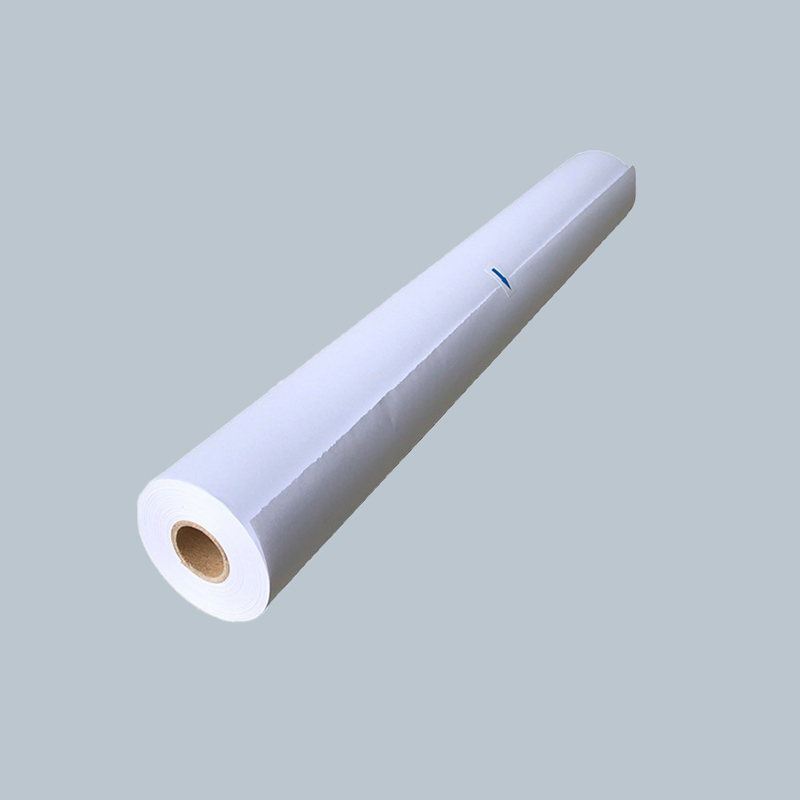
Office copy paper typically achieves an ISO brightness of 80–90%. Premium printing and writing papers may reach 96–98% ISO brightness.
Optical Brightening Agents (OBAs)
Bleaching alone often cannot achieve the extreme whiteness demanded by high-end printing grades. Optical brightening agents (OBAs) — also called fluorescent whitening agents — are chemical compounds added to the paper furnish or surface coating that absorb ultraviolet light and re-emit it as visible blue light. This blue emission compensates for the slight yellow cast that even well-bleached pulp retains, and the additional visible light output makes the paper appear brighter than a theoretically perfect white reflector measured under standard illumination.
This is why paper that looks brilliant white under fluorescent or daylight-spectrum lighting may appear noticeably less bright under incandescent light — incandescent bulbs emit very little UV radiation, so the OBAs contribute nothing under that light source. It also explains why archival papers intended for long-term document preservation are specifically formulated without OBAs, which degrade over time and can contribute to paper yellowing.
Why Unbleached and Recycled Papers Are Darker
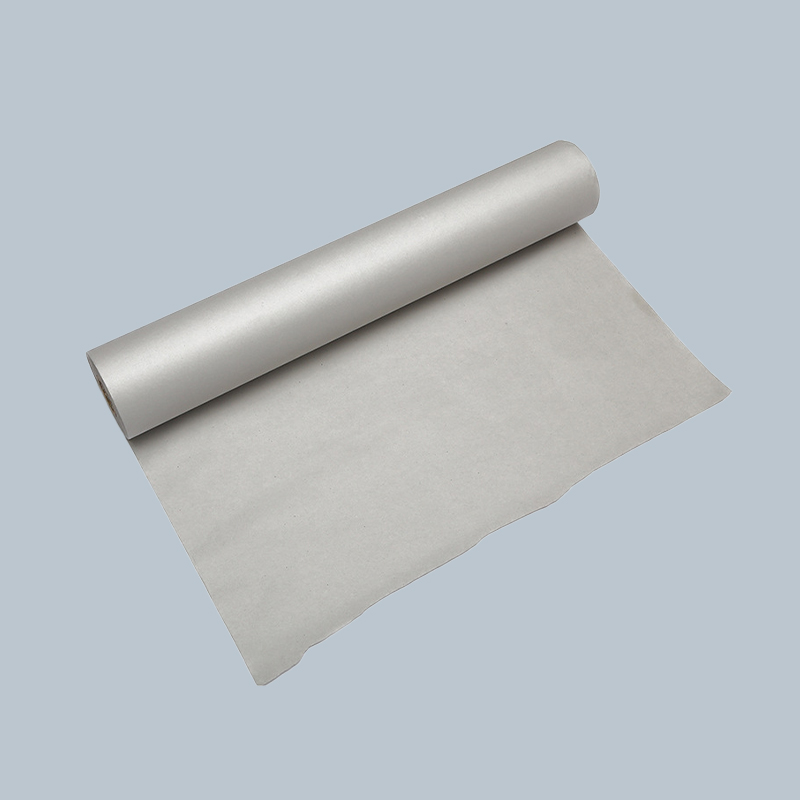
Unbleached kraft paper — the brown paper used in grocery bags, corrugated board, and packaging — retains most of its lignin and undergoes no optical brightening. Recycled papers are often darker than virgin fiber sheets because ink removal (deinking) and pulp brightening in the recycled fiber process are less complete than in virgin chemical pulping. The shade of a recycled sheet directly reflects the degree of deinking and any brightening steps applied during reprocessing.
How Does Carbon Copy Paper Work
Carbon copy paper — and its more refined successor, carbonless copy paper (NCR paper) — transfers a written or typed impression from one sheet to another without any electronic means. The two technologies achieve this through entirely different mechanisms, and both remain in active commercial use today despite the prevalence of digital document systems.
Traditional Carbon Paper: Pressure Transfers Pigment
Classic carbon paper — the original form, invented in the early 19th century — is a thin sheet coated on one side with a layer of carbon black or wax-based pigment mixed with a binder. When pressure is applied to the top sheet (by writing or typewriter keys), the coating is physically transferred from the carbon paper onto the surface of the sheet beneath it, creating a mirror impression.
The carbon paper itself is placed pigment-face-down between the original sheet and the copy sheet. The sharpness and legibility of the copy depends on the pressure applied, the hardness of the writing surface beneath, and the formulation of the carbon coating. Multiple copies can be made simultaneously by interleaving multiple carbon sheets between multiple receiving sheets, though copy quality degrades with each additional layer as the applied pressure is distributed.
Carbon paper is reusable but degrades with each use as the coating transfers away from the sheet. Heavy-use applications — typewriter manifolds, for example — required frequent replacement of carbon sheets.
Carbonless Copy Paper (NCR Paper): A Chemical Reaction Produces the Image
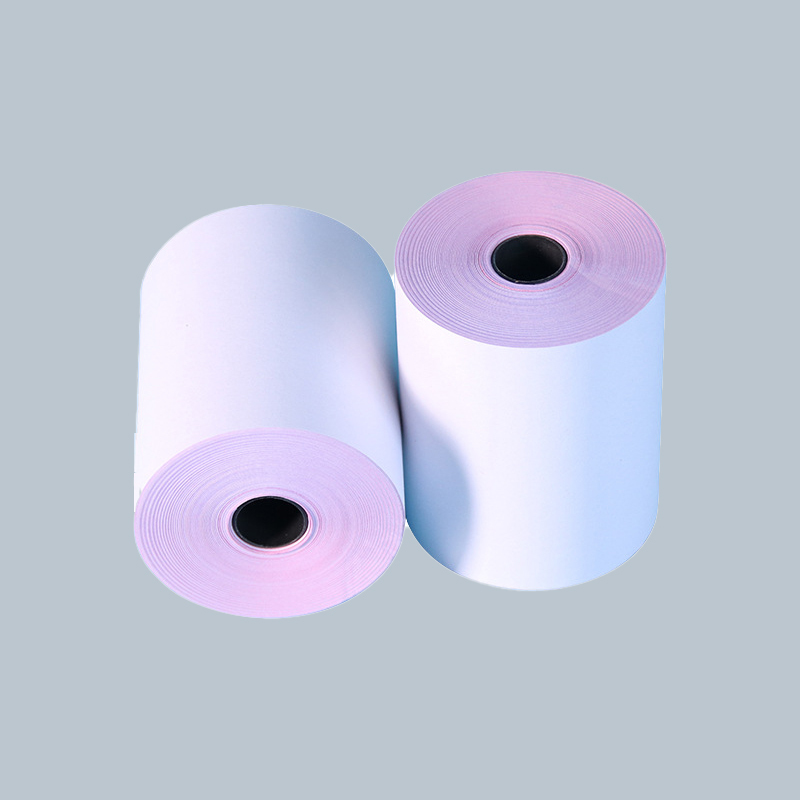
Carbonless copy paper (No Carbon Required paper, developed commercially in the 1950s) eliminates the separate carbon sheet entirely. The copy image is generated by a chemical color-forming reaction that occurs when microcapsules coated on one sheet rupture under pressure and release a colorless dye precursor that contacts a reactive clay coating on the sheet beneath.
The construction of a carbonless set involves three distinct coating types:
- CB (Coated Back): The underside of the top sheet is coated with microcapsules containing a colorless leuco dye dissolved in oil. Under writing or typing pressure, the capsules rupture and release the dye.
- CF (Coated Front): The upper surface of the receiving sheet is coated with an acidic clay (typically attapulgite or acid-treated bentonite). When the leuco dye contacts this clay, an acid-base reaction converts the dye to its colored form — most commonly blue or black — producing the visible copy image.
- CFB (Coated Front and Back): Middle sheets in multi-part sets carry both coatings — CF on the top surface to receive the impression from the sheet above, and CB on the underside to transmit it to the sheet below.
Why the Image Appears Only Where Pressure Is Applied
The microencapsulation of the dye precursor is the key engineering element of carbonless paper. Capsule walls are designed to withstand normal handling pressure but rupture reliably under the localized stress of a pen tip or typewriter key. Capsule size, wall thickness, and shell material are precisely calibrated so that the threshold rupture pressure falls above the range of incidental contact but below the minimum writing pressure of a normal pen stroke.
The color-forming reaction is essentially permanent — once the leuco dye oxidizes in contact with the acid clay, the image is stable and cannot be erased by removing the dye source. This permanence, combined with the elimination of the separate carbon insert, made carbonless paper the dominant multi-part forms technology for invoices, purchase orders, delivery notes, and receipts through the late 20th century — and it remains widely used in industries where paper-based transaction records are legally or operationally required.
Carbon Copy vs. Carbonless: Key Differences at a Glance
| Feature | Traditional Carbon Paper | Carbonless (NCR) Paper |
|---|---|---|
| Copy mechanism | Physical pigment transfer | Chemical color-forming reaction |
| Separate carbon sheet required | Yes | No |
| Reusability | Limited (degrades with use) | Single use per set |
| Copy cleanliness | Can smudge hands and surfaces | Clean to handle |
| Maximum copy sets | 4–6 (pressure-limited) | Typically 2–5 parts |
| Common current uses | Niche artistic and archival use | Invoices, receipts, delivery notes |
How These Three Processes Connect
The chemistry behind paper whiteness, the mechanics of pulp formation, and the engineering of copy paper are not isolated topics — they share a common thread in the material science of cellulose. The same hydrogen bonding that causes cellulose fibers to self-adhere during sheet formation is why paper is a suitable substrate for chemical coatings like those used in carbonless systems. The same lignin chromophores that bleaching must destroy to make paper white are the reason unbleached kraft — strong but brown — is unsuitable as a receiving sheet in high-legibility copy applications.
Paper's apparent simplicity conceals a layered set of material decisions — fiber selection, pulping chemistry, bleaching sequence, surface treatment, and functional coating — each of which directly determines what the final sheet can do. Whether the end product is a white office sheet, a carbonless invoice set, or a specialist label facestock, the path from log to finished product follows the same foundational sequence with targeted modifications at each stage.