 English
 عربى
عربى Español


Content
As a manufacturer of engineering drawing papers with more than 14 years in the industry, we know that choosing the right blueprint paper size is often the first step toward clean, accurate prints. The variety of standards can look confusing at first—ARCH versus ANSI versus the international A-series—but each system has a logic built around standard sheet dimensions, roll widths, and plotter compatibility. In this guide, we break down the sizes that matter most and share practical tips from our production floor. We want you to feel as comfortable ordering a 24-inch roll as you are specifying a paper weight.
Understanding Blueprint Paper Size Standards
Blueprint paper sizes fall into three main families, and each one was created for a different drawing tradition. North American offices typically use the ARCH and ANSI series. The ARCH series was developed for architecture, while the ANSI series is commonly used in engineering and construction management documents. Most of the rest of the world follows the ISO 216 A-series, which is based on a single square-meter sheet and a consistent halving ratio. When you order plotter paper in rolls, the roll width is usually matched to the short side of these sheet sizes, so knowing the dimensions helps you choose the right product and avoid waste.
North American ARCH Series
The North American ARCH series is designed specifically for architectural drawings. The most common sizes are ARCH C (18" x 24") and ARCH D (24" x 36"), with ARCH D often considered the standard for construction field sets because it gives enough room for details while remaining easy to roll and carry. ARCH E (36" x 48") is used for large project blueprints such as campus plans or infrastructure layouts. For smaller proposal or review sets, ARCH B (12" x 18") provides a compact format that still shows enough information for quick feedback. We see many firms keep a stack of ARCH B for markups before committing to full-size sets.
| Designation | Inches | Millimeters |
|---|---|---|
| ARCH A | 9 x 12 | 229 x 305 |
| ARCH B | 12 x 18 | 305 x 457 |
| ARCH C | 18 x 24 | 457 x 610 |
| ARCH D | 24 x 36 | 610 x 914 |
| ARCH E | 36 x 48 | 914 x 1219 |
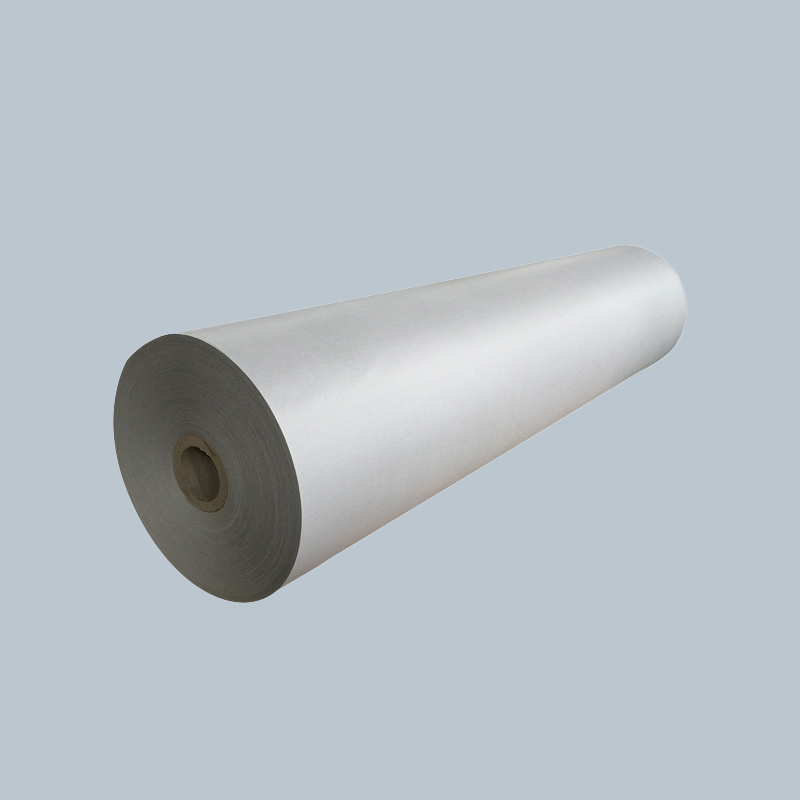
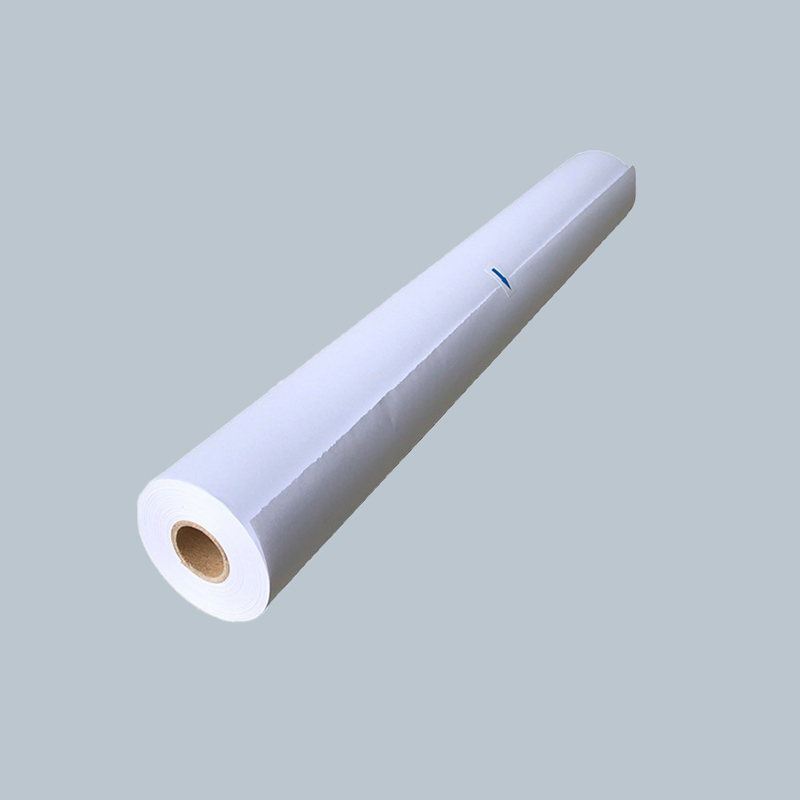
For blue line prints and hand-drawn drafting, many firms still prefer a light blue single-sided sheet that produces clear whitelines and holds up well in the field. Our light blue single-sided CAD plotter paper is produced in 915 mm rolls, which fit ARCH C and ARCH D widths while leaving a small trim margin.
 Light Blue Single-Sided CAD Plotter Paper in 915 mm RollsThis 80 gsm light blue roll paper is designed for whiteline prints and hand drafting. Its 915 mm width suits ARCH C and D sheets with trim allowance, and its controlled absorbency keeps lines clear and smudge-free.View Product →
North American ANSI Series
The ANSI series is commonly used in engineering and manufacturing drawings. Its sizes are derived from the traditional letter size by doubling the short side, creating a predictable progression. ANSI C and ANSI D are common for mechanical, electrical, and civil engineering plans. Note that ANSI D is slightly narrower and longer than ARCH D—22 x 34 inches versus 24 x 36—so a different roll width gives a better yield. ANSI E, at 34 x 44 inches, is popular for structural drawings that need a large but slightly narrower sheet than ARCH E.
| Designation | Inches | Millimeters |
|---|---|---|
| ANSI A | 8.5 x 11 | 216 x 279 |
| ANSI B | 11 x 17 | 279 x 432 |
| ANSI C | 17 x 22 | 432 x 559 |
| ANSI D | 22 x 34 | 559 x 864 |
| ANSI E | 34 x 44 | 864 x 1118 |
International ISO 216 A-Series
Outside North America, the ISO 216 A-series is the default for technical drawings. A0 has an area of one square meter, and each smaller A size is exactly half the previous one, which simplifies scaling and filing. For blueprint printing, A1 (594 x 841 mm) is the practical equivalent of a 24-inch roll, while A0 requires a 36-inch roll. A2 and A3 are often used for submittals, shop drawings, and assembly details. Many international projects now share files across borders, so being comfortable with A-series dimensions helps when you receive drawings from global partners.
| Designation | Millimeters | Inches (approx.) |
|---|---|---|
| A0 | 841 x 1189 | 33.1 x 46.8 |
| A1 | 594 x 841 | 23.4 x 33.1 |
| A2 | 420 x 594 | 16.5 x 23.4 |
| A3 | 297 x 420 | 11.7 x 16.5 |
| A4 | 210 x 297 | 8.3 x 11.7 |
If you work in metric or export to international clients, stocking A-series rolls alongside ARCH and ANSI gives you flexibility without changing print settings.
Choosing the Right Blueprint Paper Size
How do you decide between ARCH D and ANSI D, or between A1 and A0? Start with the plotter you use. Most wide-format printers accept 24-inch or 36-inch rolls, and the rolled paper width should match the short dimension of your drawing sheet. Next, consider how the drawings will be used. Field sets are often printed at half size (11" x 17") for convenience, while full-size sets are kept in the office or issued for permit. The complexity of the drawing also plays a role: detailed MEP drawings may need ARCH D or larger to keep text legible, while a simple renovation might be perfectly clear on ARCH C.
- Choose ARCH C or ANSI B for preliminary concepts that change often.
- Choose ARCH D or ANSI D for final construction documents.
- Choose ARCH E, ANSI E, or A0 for large-site plans and coordination drawings.
Your production schedule can also influence size choice. For example, if a contractor needs quick half-size sets in the field, a regular 11" x 17" output saves paper and plotter time. For a fuller discussion, see our guide on choosing CAD plotter paper size according to drawing content.
Paper Weight and GSM Considerations
Besides dimensions, the physical weight of blueprint paper is part of the specification. In most of the world, paper is described in grams per square meter (gsm). Lighter papers around 80 gsm are economical for everyday check prints, and they are fine when the drawing will not be handled extensively. A 90 gsm sheet is the professional standard because it runs smoothly through plotters, resists curling, and takes folds without cracking. If you need a premium archival print, 100 gsm gives the paper more body, better opacity, and a more substantial feel. In our experience, the right gsm also depends on the plotter type: some inkjet systems prefer a slightly heavier sheet to prevent bleed-through, while laser printers can handle lighter weights without jamming.
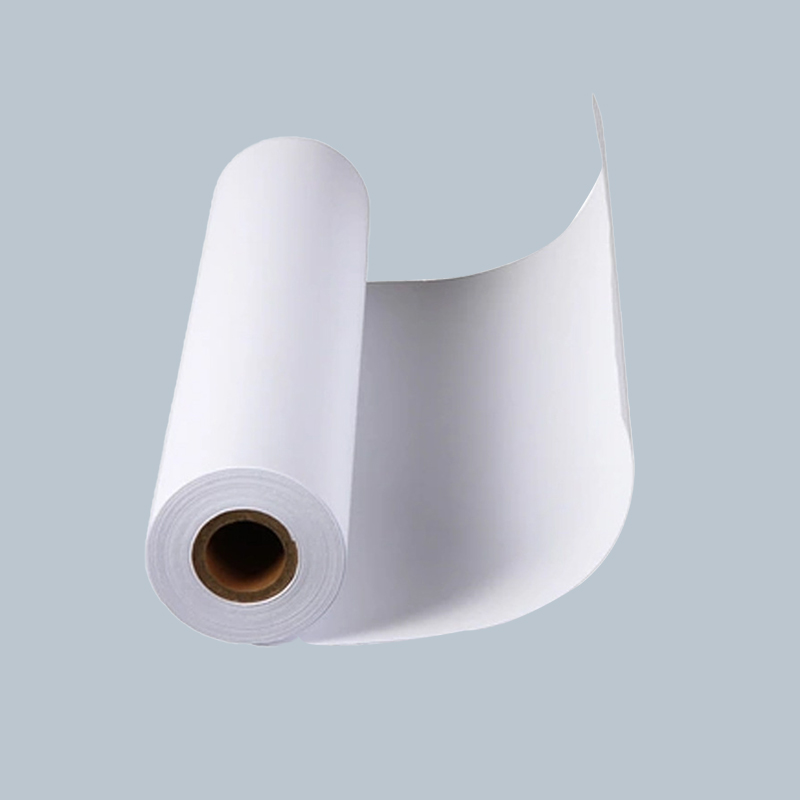
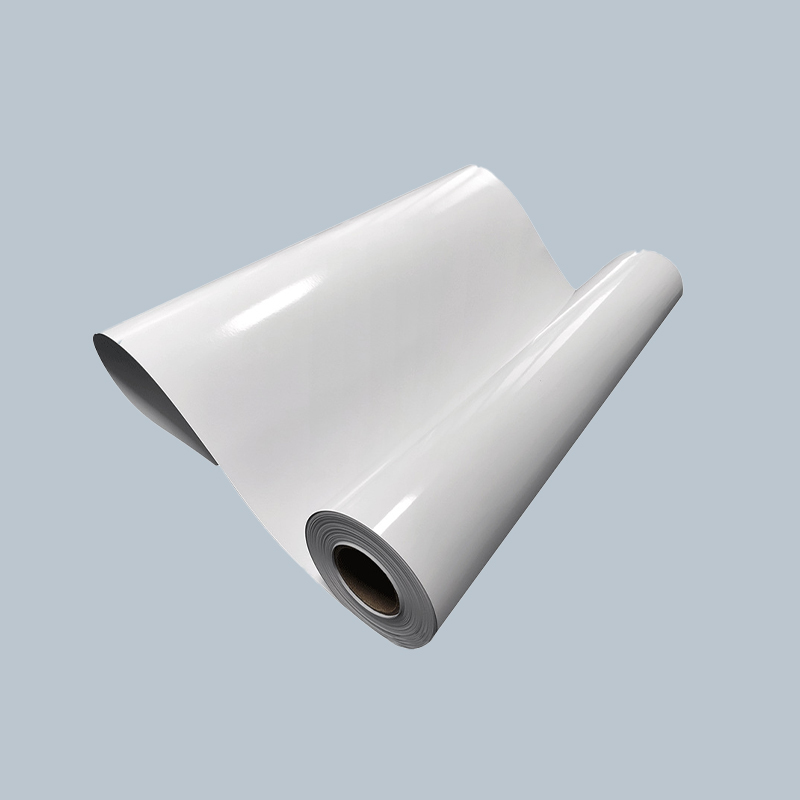
Our production experience shows that a consistent basis weight is critical to color consistency and dimensional stability. This is why we invest in automatic quality control systems on our paper machines. For standard engineering drawings, our white CAD plotter papers are available in roll widths matched to common blueprint sizes, including 24-inch, 36-inch, and metric equivalents.
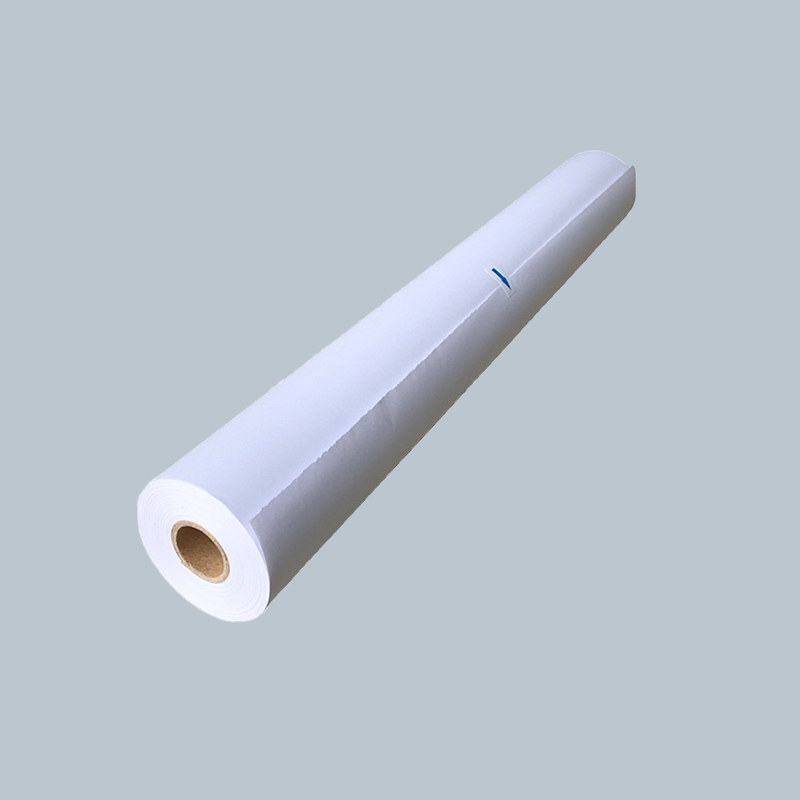 Coated White CAD Plotter Paper with Glossy SurfaceThis coated plotter paper enhances line sharpness, color saturation, and moisture resistance, making it suitable for architectural, mechanical, and electrical drawings. Multiple grammages and roll widths are listed for different plotting needs.View Product →
Paper Finishes and Types for Blueprints
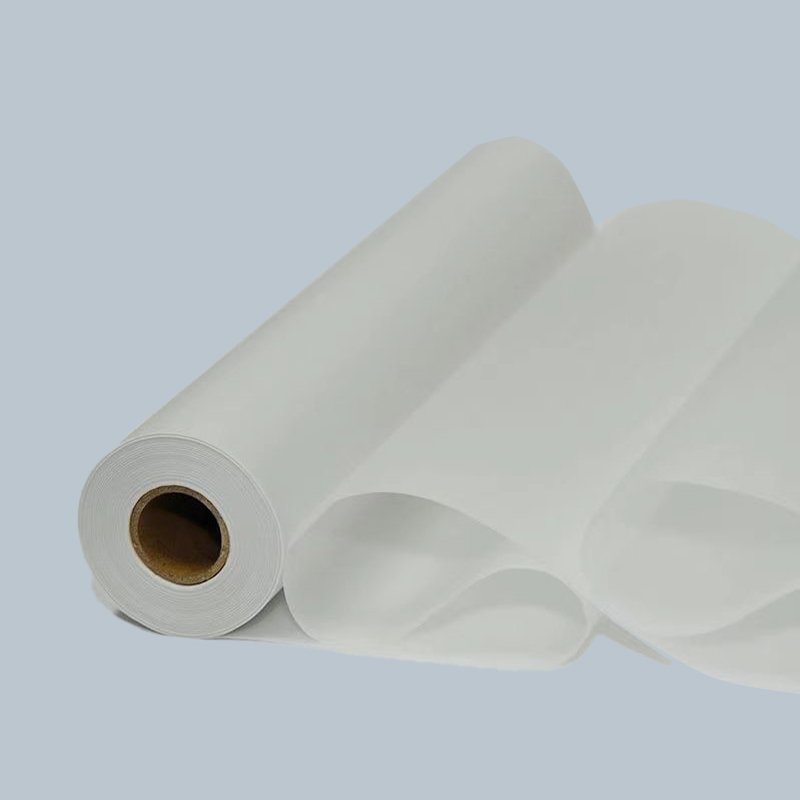
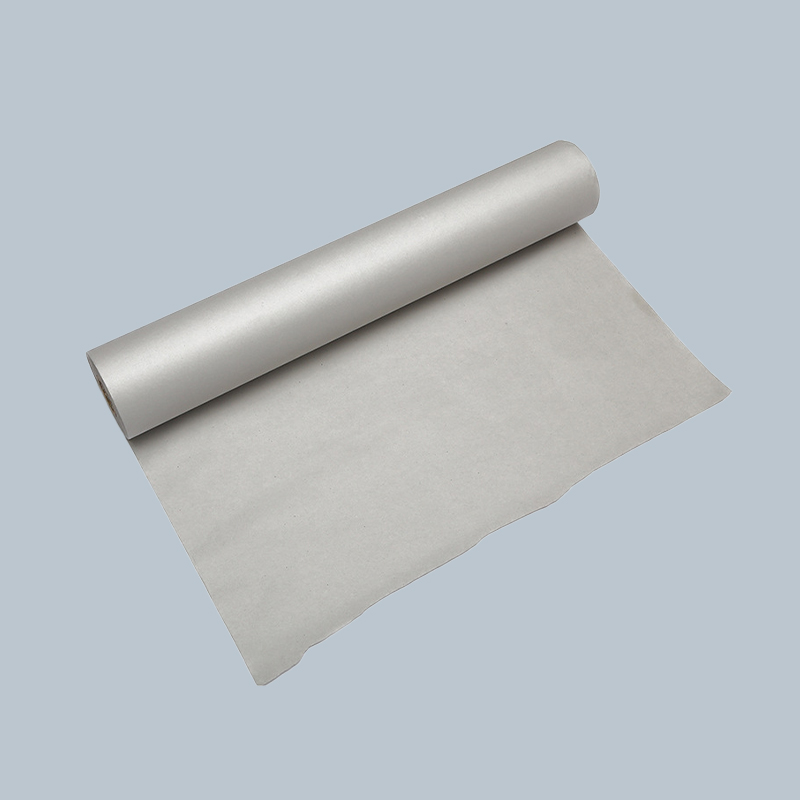
The surface and composition of the paper affect how ink and toner adhere. Coated papers give sharper lines and more vivid color, which is useful for presentations and color-coded drawings. Uncoated sheets absorb ink quickly for a dry, matte finish that resists smudging during handling. Blueprint paper can also be translucent: tracing paper is essential when layers must be compared by overlaying sheets, and it is still widely used for hand drafting in architecture and landscape design. A full-size 90 gsm tracing paper is a favorite among architects because it has enough tooth for pencil and ink while remaining transparent enough to see a sheet underneath.
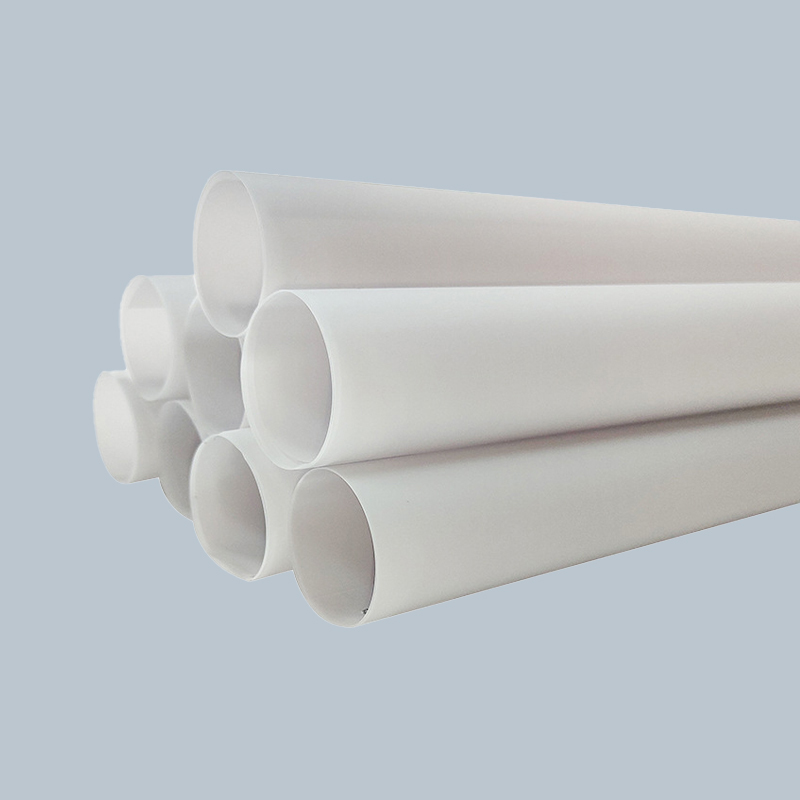 Full-Size 90 gsm Tracing Paper for Art and DraftingThis translucent tracing paper offers even light transmission and a smooth surface, ideal for overlaying drawings or hand drafting. The 90 gsm weight balances transparency and tooth, making it a practical choice for architects and artists.View Product →
For anyone selecting a paper family, we recommend reviewing the complete specifications before ordering. Our article on CAD plotter paper selection, specifications, and roll choices explains how coating, brightness, and roll width come together, and it includes a checklist that is useful for both new and experienced purchasers.
Blueprint paper size is not just a number; it determines how easily your team reads, handles, and archives drawings. Whether you work in imperial ARCH sizes, engineering ANSI sizes, or international A-series, the right paper rolls and sheets make a measurable difference in print quality and workflow. With over 20 production lines and a permanent stock of 5,000 items, we can supply the common sizes and custom widths your projects demand. Our factory in Suzhou has served global customers for more than 14 years, and we welcome inquiries about roll dimensions, bulk pricing, and custom cutting. If you need assistance matching a paper to your plotter and drawing size, our team is ready to help you get the right fit.