 English
 عربى
عربى Español


Content
Six months after a logistics company switched to a lower-priced source of 2-ply carbonless NCR paper, their drivers started bringing back delivery notes with second copies too faint to read. The stock visually matched the previous paper. The coating did not. That experience is common enough that experienced buyers now treat NCR paper as a chemistry purchase rather than a commodity purchase.
The choice of a 2 ply carbonless NCR paper supplier determines three things: how legible copies remain after months in a warehouse, how consistently the paper performs across different printers and seasons, and what your real cost per usable form is once waste and reprints are counted. This article explains what to verify before you place that next order.
What Is 2-Ply Carbonless NCR Paper?
NCR means No Carbon Required. A 2-ply set is the simplest carbonless construction: a top sheet coated on its back (CB) and a bottom sheet coated on its front (CF). When a pen or a printer strike presses the top sheet, microcapsules in the CB coating burst and release a colorless dye precursor. The CF coating on the sheet below contains an acid-reactive clay that reacts with that chemical to form a visible image.
Two-ply sets are the standard for delivery notes, invoices, purchase orders, work orders, and receipt books. Two copies cover the classic need: one for the customer, one for your records. But the simplicity of the final product hides a demanding manufacturing process. The top sheet must transmit pressure evenly, and the bottom sheet must stay light enough to keep set thickness manageable yet opaque enough to remain readable. The complete guide to carbonless paper and paper types explains how these coating systems work in greater detail.
Specifications That Determine Form Performance
Ordering 2-ply carbonless NCR paper by name is not enough. Verify these five parameters with your supplier and confirm them on the quotation.
| Parameter | Typical Range | Why It Matters |
|---|---|---|
| Top sheet (CB) basis weight | 55–60 gsm | Stiff enough to transfer impact without tenting |
| Bottom sheet (CF) basis weight | 47–55 gsm | Keeps set thickness low while preserving opacity |
| Sheet format | 59 × 82 cm, A4, or custom | Determines trim yield and compatibility with padding equipment |
| Roll width | 48 mm – 1050 mm | Press-matched widths minimize edge trim waste |
| Coating system | CB / CF / CFB | 2-ply sets need CB and CF only; 3-ply sets need a CFB middle sheet |
Pay particular attention to the basis weight of the individual sheets. Some quotations show an attractive combined weight for the set, but the top sheet is underweight, which produces faint characters and uneven impressions on continuous printers. Ask for the basis weight of each sheet separately.
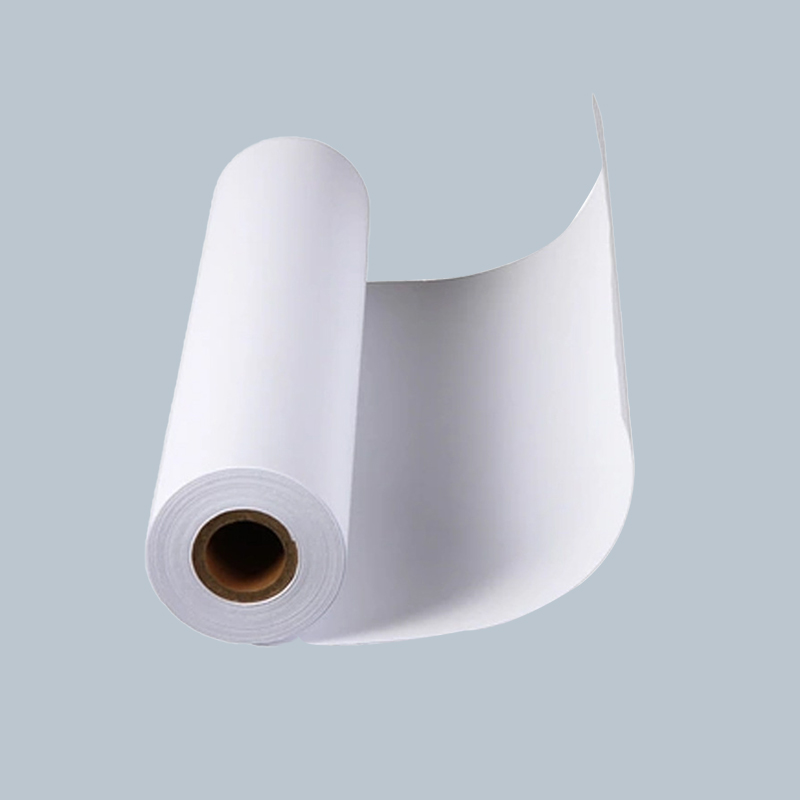
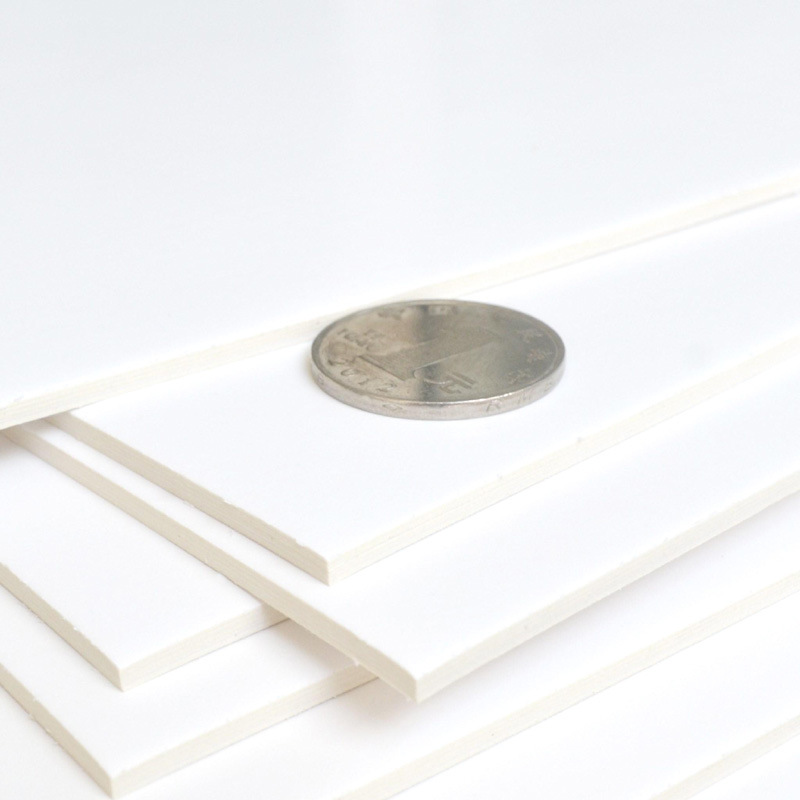
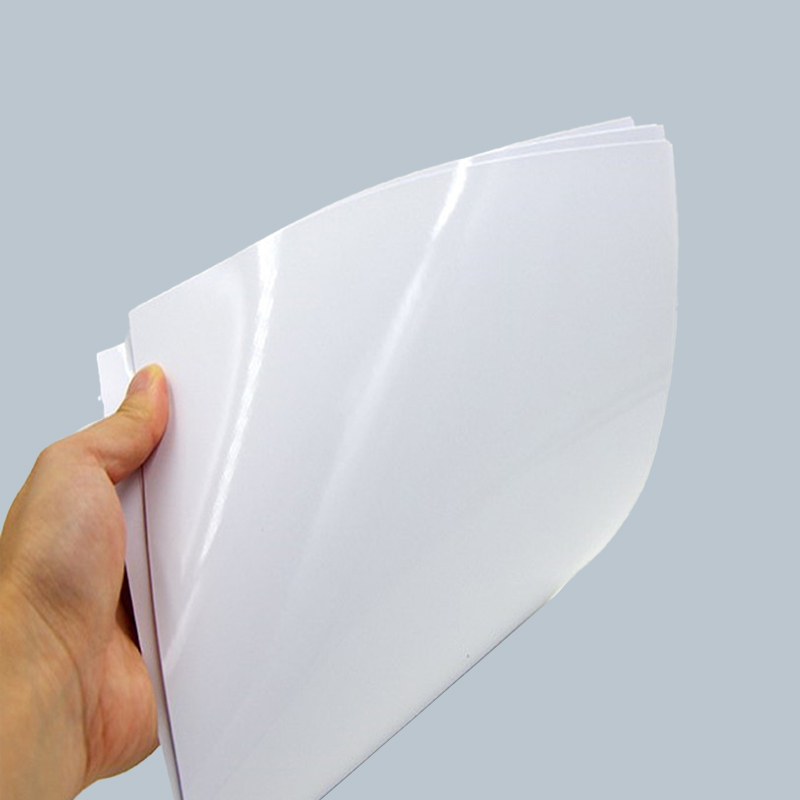
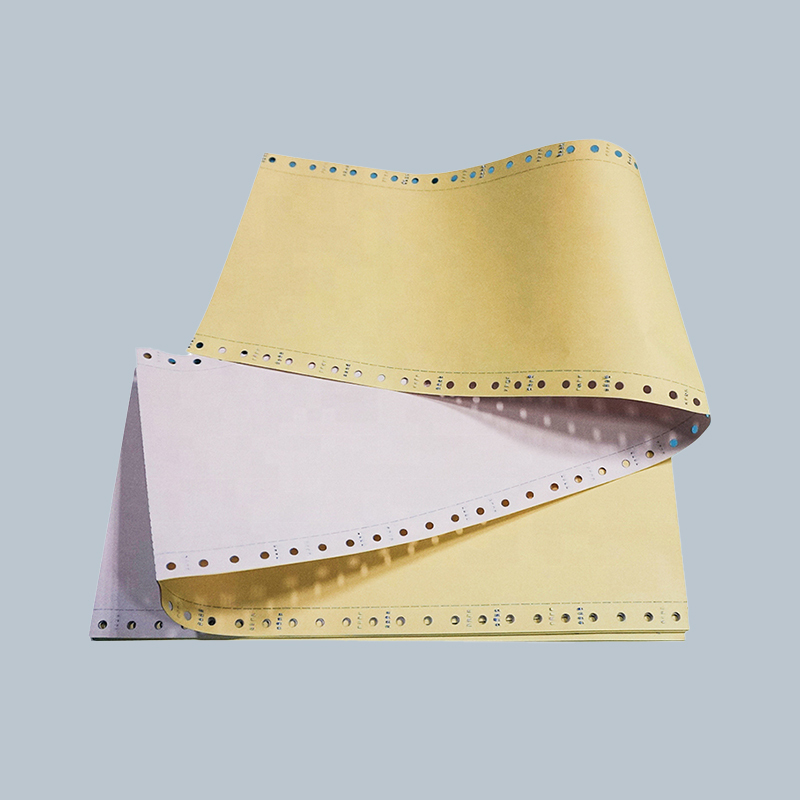 59x82 cm White and Yellow Carbonless NCR Paper SheetsCheck this standard-size carbonless sheet set with white top and yellow bottom, offering clear copy transfer and customizable basis weights for continuous printer forms, receipts, and delivery notes.View Product →
Sheet format also deserves attention. The standard 59 × 82 cm size is the workhorse of forms converters: it trims cleanly into A4 or letter sizes with minimal waste, and it matches the most common edge-padding layouts. A white top sheet with a yellow bottom sheet remains the most widely requested combination because the contrast makes the two parts of the set easy to tell apart.
Why Coating Quality Separates Good NCR from Cheap NCR
The difference between a premium sheet and a budget sheet is rarely visible when you first open the carton. It shows after weeks of storage, during high-speed printing, or when forms sit in a delivery van in summer heat.
Three coating defects cause most NCR complaints:
- Uneven CB coverage. Streaks or thin bands in the microcapsule layer appear as repeating white lines on the developed copy. They may not be visible immediately but become obvious after the forms have aged.
- Overly fragile microcapsules. Capsules that rupture under the weight of stacked cartons create random dark specks and give forms a dirty appearance.
- Low-reactivity CF developer. If the clay formulation has the wrong pH or inadequate dispersion, the developed image turns gray instead of crisp blue or black, and it fades faster.
Moisture amplifies every one of these defects. When relative humidity stays above 60 percent, the coatings absorb water, the capsules soften, and shelf life shortens. In extremely dry conditions, capsules become brittle and can rupture during printing. This is why production controls matter. A mill with automated basis-weight and moisture monitoring, running wide modern paper machines with computer-controlled coating application, holds these properties within tight tolerances. A trading company selling rewound rolls cannot adjust or control any of them.
What to Look for in a 2-Ply Carbonless NCR Paper Supplier
Use four criteria to filter candidates:
- Manufacturing capability. A genuine producer controls the base paper, the coating formulation, and the slitting or sheeting process. A trader controls none of these and cannot fix a problem when one shows up in your press.
- Quality automation. Automated systems that measure basis weight, moisture, and coating weight continuously across the web catch variation at the moment it occurs instead of discovering it weeks later in a customer complaint.
- Certifications and inspection trails. ISO 9001 quality management, ISO 14001 environmental management, FSC chain of custody, and SGS third-party inspection reports give you a documented basis for trusting each shipment.
- Stock availability. NCR paper is often needed on short notice. A supplier with permanent stock can ship standard grades immediately; one without it forces a production run and extends the lead time by weeks.
Applying these criteria filters out brokers and points you toward manufacturers that can stand behind both the chemistry and the paper.
Sheets, Rolls, and Continuous Formats
The right buying format depends on your conversion process:
- Sheet sets. Pre-cut to a standard size such as 59 × 82 cm and ready for guillotining, perforating, and edge padding. Ideal for receipt books, delivery books, and small forms runs.
- Jumbo rolls. The most economical raw format for forms converters with full production lines. A 1050 mm jumbo roll can be slit to the exact widths your press uses.
- Slit rolls and continuous paper. Matched to the width of your forms press or continuous printer. Controlled caliper and low static are essential for registration accuracy at high speed.
For roll buyers, slitting width is a direct cost item. Every millimeter of excess trim is paper you paid for and then threw away. A supplier that holds wide jumbo stock and slits precisely lets you protect that margin.
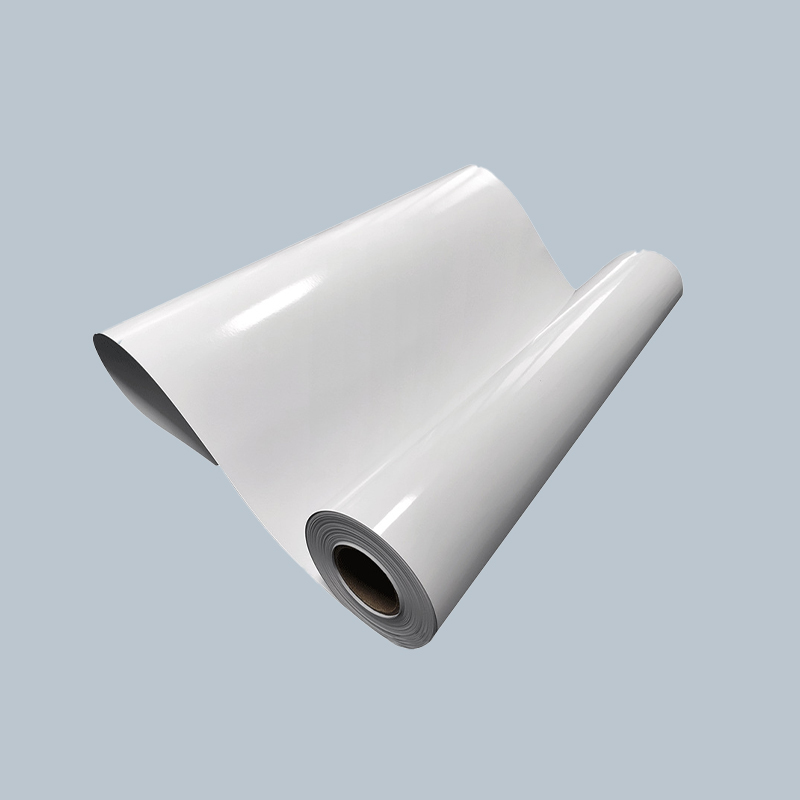
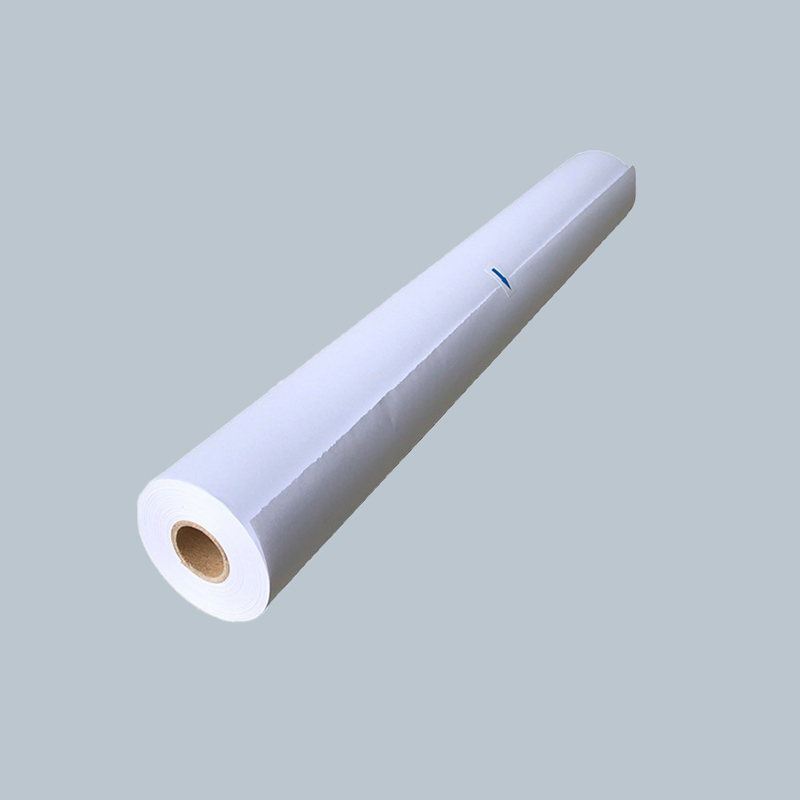
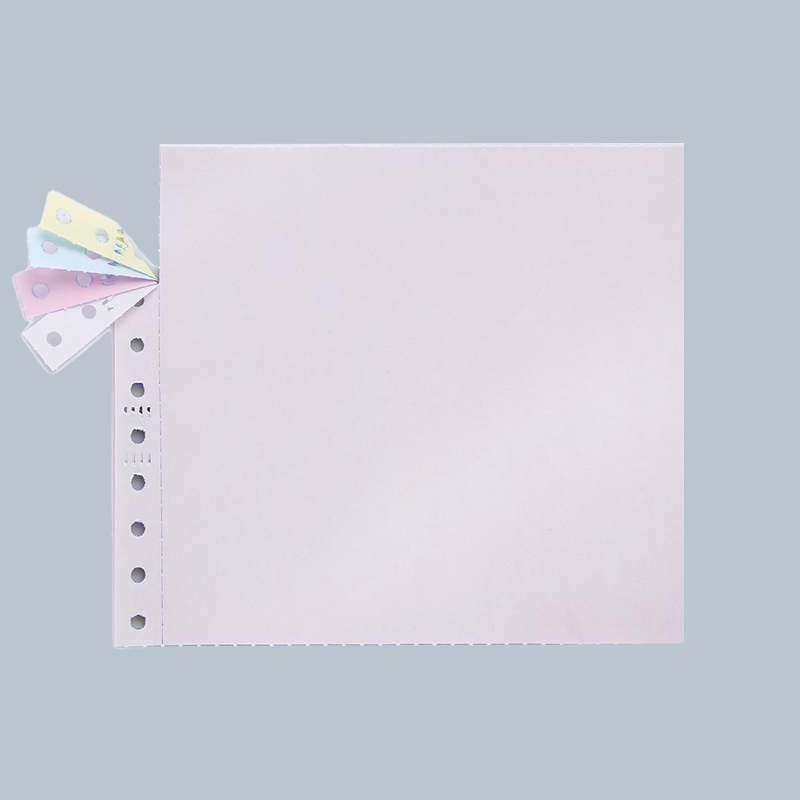 White Jumbo Carbonless NCR Paper Rolls for Precise SlittingEvaluate these bright white carbonless rolls in common widths like 240, 241, 381, and 483 mm, designed for efficient slitting and continuous feed in POS, invoicing, and order processing.View Product →
Continuous forms add another layer of requirement. The paper web must feed evenly through pin-fed printers and forms presses, so the manufacturer has to control caliper balance, moisture profile, and static buildup at the converting stage. Suppliers experienced in continuous NCR paper production understand these parameters and adjust for them.
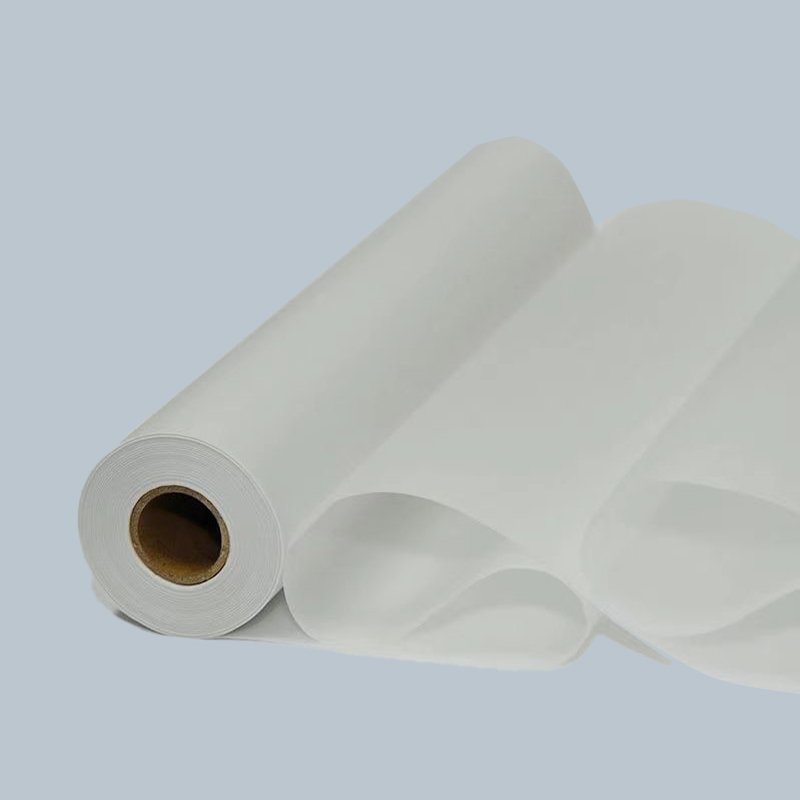
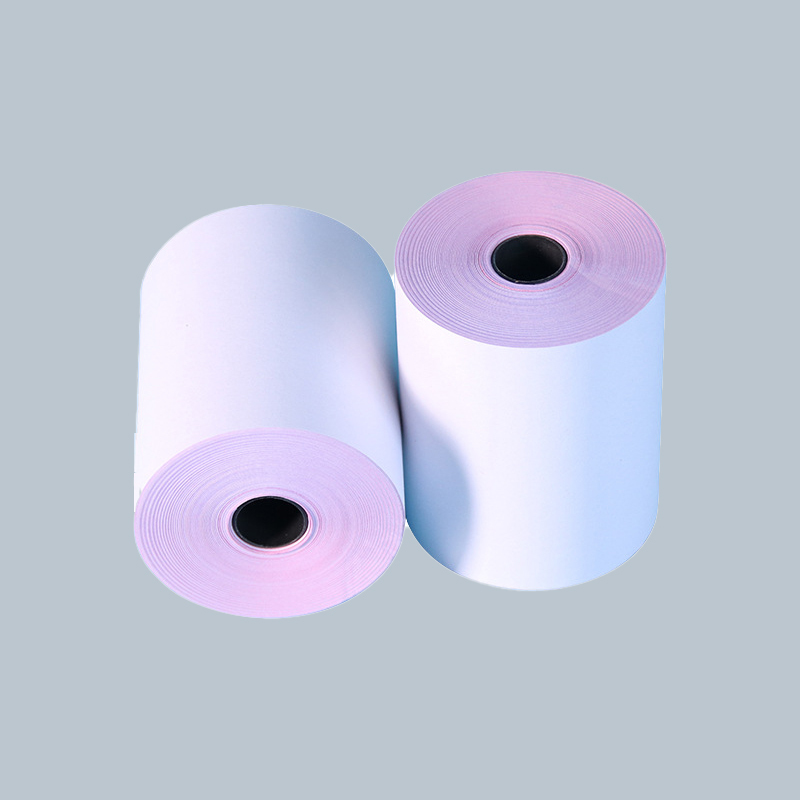 NCR Continuous Computer Printing Paper with Sequential NumbersReview this continuous feed NCR paper featuring sequential numbering and self-copying clarity, suited for dot matrix and impact printers used in invoices, orders, and medical forms.View Product →
Why For-Long Is Structured to Deliver Consistent NCR Paper
For-Long has manufactured paper products in Suzhou, China, for 14 years. Its 20-plus production lines give an annual capacity above 60,000 tons. The paper machines, supplied by Voith, are 5280 mm wide and run at 1400 meters per minute, with industrial computer systems controlling the whole process.
The company invested more than 10 million RMB in QDS and QCS quality-control systems. These systems measure and adjust basis weight, moisture, and coating uniformity in real time across the full web width. For carbonless paper, that level of control translates directly into coating consistency, and coating consistency is the basis of legible copies.
For-Long also keeps around 5,000 items in permanent stock, including standard NCR grades, so recurring orders do not have to wait for a production slot. The company operates under ISO 9000, ISO 14000, and ISO 18000 certification, with SGS and FSC recognition supporting export documentation.
For-Long's full product range spans engineering drawing papers, digital art papers, packaging boards, and printing papers, so converters that already source other paper grades can consolidate their supplier list.
A simple test reveals a reliable 2-ply carbonless NCR paper supplier: ask for a pre-production sample, store it for 30 days in normal warehouse conditions, run a test form through your own printer, and check the copies immediately and again after another month. Stable image development across that period means the coating chemistry is right.
If a supplier hesitates to share coating specifications, cannot state basis weight tolerances, or treats moisture content as an irrelevant detail, that is the clearest sign to look elsewhere. NCR paper is a precision coating product. Work with a manufacturer that proves it on every shipment.